Halloween is observed on the evening of October 31, the vigil before the Christian feast of All Saints' Day. What began as a night on the church calendar gathered costumes, lanterns and door-to-door treats over the centuries, and it is now one of the largest seasonal occasions in the United States: the National Retail Federation forecasts $13.5 billion in Halloween spending for 2026.
Its history is partly documented and partly disputed, its meaning differs from home to home, and the details that matter for planning, from the weekday to local trick-or-treat hours, change every year.
Quick Answer
Halloween 2026 is on Saturday, October 31, the first Saturday Halloween since 2020. The date never changes, only the weekday does, and the next Saturday Halloween is 2037. Trick-or-treat hours are set by each town, and U.S. and Canadian clocks go back on Sunday, November 1. Compared with 2025, spending is forecast to hold near last year's record: $13.5 billion against $13.1 billion.
How the Halloween Date Works: A Fixed Day and a Changing Weekday
Halloween is fixed to October 31 because it is the vigil of All Saints' Day on November 1. Unlike Easter, it does not follow the moon, so the date stays the same and only the weekday shifts from year to year. What can differ from town to town is the trick-or-treat window, which local authorities set.
How many days until Halloween
Count the calendar days from today to October 31, leaving today out. In October, subtract today's date from 31: October 8 leaves 23 days, October 20 leaves 11, and October 30 leaves one. In September, subtract the date from 61. In August, subtract it from 92.
Online countdowns sometimes differ by a day because some include the current day and some round up.
Halloween Weekdays From 2026 to 2043: When the Next Saturday Halloween Lands
Because the date never moves, the weekday decides how easy a year's celebration will be. Friday and Saturday are the easiest nights. Sunday comes before a school and work day, and Monday through Thursday are school nights. The table lists every Halloween from 2026 through 2043.
| Year |
Weekday |
What it means for plans |
| 2026 |
Saturday |
First Saturday Halloween since 2020 |
| 2027 |
Sunday |
Weekend night before a school and work day |
| 2028 |
Tuesday |
Leap year, school night |
| 2029 |
Wednesday |
School night |
| 2030 |
Thursday |
School night |
| 2031 |
Friday |
Weekend night, but not a Saturday |
| 2032 |
Sunday |
Leap year, Sunday before school and work |
| 2033 |
Monday |
School night |
| 2034 |
Tuesday |
School night |
| 2035 |
Wednesday |
School night |
| 2036 |
Friday |
Leap year, weekend night but not a Saturday |
| 2037 |
Saturday |
The next Saturday Halloween after 2026 |
| 2038 |
Sunday |
Sunday before school and work |
| 2039 |
Monday |
School night, and a full moon on Halloween |
| 2040 |
Wednesday |
Leap year, school night |
| 2041 |
Thursday |
School night |
| 2042 |
Friday |
Weekend night |
| 2043 |
Saturday |
Saturday Halloween, six years after 2037 |
The weekday of October 31 moves forward one day each year, and two days in a leap year, because February 29 adds an extra day before October. The jump to 2037 can be checked by hand: from 2026 to 2037 there are 11 yearly shifts plus three extra days for the leap years 2028, 2032 and 2036. That is 14 days, exactly two weeks, so the weekday lands back on Saturday.
Some popular pages name 2031 or 2036 as the next Saturday Halloween. Both fall on a Friday. Across these 18 years, nine Halloweens land on a Friday, Saturday or Sunday and nine land on a weeknight.
What Is Halloween? Its Name, Its Meaning and the Three-Day Season It Begins
Halloween is the night of October 31, historically called All Hallows' Eve. It works as both a Christian vigil and a largely secular holiday of costumes, candy and neighborly visits. Irish and Scottish immigrants made it a major American holiday in the 19th century, and American influence then carried its customs to continental Europe, Latin America, Australia and Japan.
What the word Halloween means
"Hallow" is an old English word for a holy person or saint, and "even" means evening, so the name means "holy evening." The etymology record shows October 31 described as "alle halwe eue" by about 1300. The shortened Scots form Hallowe'en appears in the 1560s, and Robert Burns's 1785 poem helped popularize it.
Allhallowtide: Halloween, All Saints' Day and All Souls' Day
Halloween is the first of three days called Allhallowtide. October 31 is the vigil, November 1 is All Saints' Day, which honors the saints, and November 2 is All Souls' Day, which remembers the faithful who have died.
October 31 also carries Reformation Day, which marks the day Martin Luther is said to have posted his Ninety-five Theses in Wittenberg in 1517. It is a separate church observance that happens to share the date.
Church traditions for the night include a vigil service, prayer and fasting, and in some places cemetery visits to place candles and flowers. Because some Christians once kept the day meatless, apples, potato pancakes and soul cakes became Halloween foods.
The Origin of Halloween: What Historians Can Document and Where They Disagree
The best-documented answer is Christian: the name, the date and the vigil come from the church calendar. How much older Celtic or Roman customs shaped the folk traditions is argued in both directions.
How November 1 became All Saints' Day
Sources differ on several details, so this list keeps to what the records support.
609: Pope Boniface IV rededicates the Pantheon in Rome to Mary and all martyrs on May 13, a spring date for the saints' feast.
731–741: Pope Gregory III dedicates a chapel in St. Peter's in Rome to all saints on November 1, the earliest evidence for that date.
800: The Northumbrian scholar Alcuin keeps All Saints' Day on November 1, and a ninth-century English calendar lists it on that date.
835–837: Emperor Louis the Pious orders All Saints' Day kept on November 1 in the Frankish lands, at Pope Gregory IV's urging. Sources date this to 835 or 837.
Around 1000: Odilo, abbot of Cluny, sets November 2 as a day of prayer for the dead in his monasteries. The traditional date is 998, though some accounts place it later. The observance then spreads across the Western church.
Is Halloween a pagan holiday? The Samhain debate
Samhain is the Irish name for the start of winter, around November 1, and it appears in some of the earliest Irish literature. What is disputed is whether it was a pan-Celtic religious festival and whether it shaped Halloween.
Historians disagree about how much Samhain shaped Halloween. Some, such as Nicholas Rogers, author of Halloween: From Pagan Ritual to Party Night, trace Halloween from the Celtic festival of Samhain, which later picked up elements of the Christian Hallowtide. Others argue that the evidence for a Celtic festival of the dead is thin and that All Saints' Day and All Souls' Day explain more of Halloween's focus on the dead.
Calling these customs simply Celtic survivals is also too simple, because parading, begging and costumes also appear in Christmas mumming and Guy Fawkes customs. Modern Pagans and Wiccans keep their own Samhain observances today. Those are living religious practices, a different question from what medieval Ireland did.
Why Is Halloween Celebrated? Community, Remembrance and the Appeal of a Safe Scare
Halloween lasts because it offers three things at once: a reason to meet neighbors, a way to remember the dead, and a safe way to be scared.
On most evenings neighbors seldom meet. Halloween gives a reason to knock on a door, and a thirty-second chat over a candy bowl can be the most neighborly moment of the month. The date also carries remembrance, because the vigil before All Saints' Day and All Souls' Day built the memory of the dead into the calendar long before costumes arrived.
Researchers have measured the appeal of fear. In a haunted house field study in Denmark, 110 visitors aged 12 to 57 wore heart rate monitors. Enjoyment rose with fear, then fell once the fear became too intense. A good scare is fun only up to a point, and that point differs for everyone.
Halloween Traditions: How Trick-or-Treating, Costumes and Jack-o'-Lanterns Took Shape
Trick-or-treating
Two older customs are usually named as ancestors: souling, in which poor people went door to door at Allhallowtide asking for soul cakes in exchange for prayers, and guising, in which costumed children visited homes in Scotland and Ireland. Irish and Scottish immigrants carried their customs to North America in the 19th century.
The phrase itself is younger. According to Smithsonian Magazine, the term "trick-or-treating" began appearing in the 1920s. The magazine adds that trick-or-treating took off in the United States after World War II, once sugar rationing ended.
Costumes
Costumes grew from mumming and guising. In the Middle Ages, churches too poor to display relics of martyrs sometimes let parishioners dress as saints instead, and some Christians still do. Medieval pageants of the danse macabre, in which people dressed as corpses, may be an ancestor of the costume party.
Jack-o'-lanterns and pumpkins
In Ireland, Scotland and northern England the turnip was the traditional lantern. Immigrants in North America switched to the softer, larger pumpkin, and pumpkin carving is recorded in the United States in 1837. The story of Stingy Jack is folklore, not documented history.
Pumpkin ideas without dark imagery
A pumpkin does not have to be scary. One carved with a star, a lantern or a cross cutout glows softly on a porch. A painted pumpkin with a favorite verse or a family name needs no carving at all, and a pile of small pumpkins lined up as a "harvest garden" works for a church lawn.
For a no-carve option, paint pumpkins with acrylic or chalk paint, add a name, a verse or a simple pattern, and let them dry fully before stacking. A hollowed pumpkin can hold a small battery tea light for a glow without a flame. The U.S. Consumer Product Safety Commission has reported that pumpkin carving accounts for a large share of Halloween-related injuries treated in emergency rooms, so children can draw the design while an adult does the cutting.
Halloween Statistics: What the Latest Numbers Show About Spending, Costumes and Candy
How much Americans spend
According to the annual retail survey of 7,889 consumers, Americans are expected to spend $13.5 billion on Halloween in 2026. Planned spending averages $115.14 per person, and 74% of people say they will celebrate.
Spending forecasts have swung over the past five years: $10.6 billion in 2022, $12.2 billion in 2023, $11.6 billion in 2024, $13.1 billion in 2025 and $13.5 billion in 2026. These are forecasts, not final sales. Most figures in this section come from one source, NRF's September survey of about 8,000 consumers, so read them as a single survey's estimate.
What people buy
Costumes lead at $4.4 billion, with 71% of shoppers planning to buy one. Decorations follow at $4.3 billion, and candy at $4.1 billion, bought by 96% of shoppers. Adults are expected to spend about $2 billion on costumes, children $1.5 billion and pets $0.92 billion.
Witches (4.8 million adults) and vampires (4.2 million) top adult costume plans. About half of shoppers (49%) start in September or earlier, up from 34% in 2016, and 79% expect tariffs to push prices higher.
How shoppers are saving
Shoppers are mindful of cost. If prices run higher than expected, about one in three say they will comparison shop and 26% will look for coupons or sales, while 34% look for items they can reuse in future years. Greeting cards are growing too: 42% plan to buy Halloween cards in 2026, up from 38% in 2025, for about $800 million. About half of adults say they will dress in a costume.
How people plan to celebrate
Handing out candy leads the list of plans at 61%, followed by wearing a costume (50%), and decorating the home or yard, carving pumpkins and watching scary movies at 42% each. Participation reached 74%, up from 69% ten years ago, but NRF notes that trick-or-treating and pumpkin carving have not returned to pre-pandemic levels, while themed events such as trunk-or-treat and pumpkin patches appeal most to families with young children.
Halloween facts that surprise people
Not a federal holiday. The federal calendar lists 11 holidays, and Halloween is not one.
Houdini died on Halloween. Harry Houdini died on October 31, 1926, in Detroit at age 52, so 2026 marks the centennial. The cause was peritonitis from a ruptured appendix, and historians debate whether a punch earlier that month played a role.
A Halloween full moon is rare. Any full moon on October 31 must be the second of the month, so it is always a blue moon. The last was in 2020, the first visible in every U.S. time zone since 1944 (2001 had one in the Central and Pacific zones only), and the next is in 2039.
Halloween 2026 vs. 2025: What Is Different This Year
Halloween 2025 was a Friday and Halloween 2026 is a Saturday, and the headline numbers look alike: NRF forecasts $13.5 billion in 2026 against $13.1 billion in 2025. The real differences are practical ones: how the weekend affects trick-or-treat hours, what price pressure has done to candy, which costumes are trending, and where people shop. This section separates what has been measured, what is only forecast and what is a guess.
The Short Version
Total spending is forecast up about 3% ($13.5 billion against $13.1 billion), while per-person spending is nearly flat ($115.14 against $114.45) and 74% plan to celebrate against 73%. The bigger changes are in behavior and retail. The share planning to decorate fell from 51% to 42% and candy handouts from 66% to 61%, children's Spider-Man costumes doubled to 4.6 million, and Spirit Halloween is opening a record 1,575 stores. A separate Deloitte survey also finds early shopping.
What happened on Halloween 2025
Halloween 2025 landed on a Friday, with All Saints' Day on Saturday, November 1, and U.S. clocks going back on Sunday, November 2. In its September 2025 survey, NRF projected a record $13.1 billion in spending, up from $11.6 billion in 2024 and above the earlier high of $12.2 billion in 2023. Per-person spending set a record of $114.45, and 73% of consumers planned to celebrate, up from 72% a year earlier.
The weather set the mood early. According to NRF's weather analysis, August 2025 was the coolest August in eight years and September the coolest in five, which lifted demand for fall decorations and seasonal items before October began.
The costume story was dominated by one film. Google's Frightgeist list of trending costume searches, as reported by the Deseret News, put KPop Demon Hunters characters in the top five spots, led by Rumi and followed by Zoey, Mira, Jinu and Baby Saja, with other entries including the Chicken Jockey from A Minecraft Movie, Labubu, Elphaba from Wicked and the Lorax. Spirit Halloween carried the only officially licensed costumes, reports of shortages followed, and a KPop Demon Hunters sing-along returned to theaters on Halloween weekend. NRF's survey, which asks what people plan to wear rather than what they search for, still had witches and Spider-Man on top: 5.6 million adults planned to be witches and 2.3 million children planned to be Spider-Man.
Shoppers went in with price worries. About 79% expected tariffs to push Halloween prices higher, yet 49% began shopping in September or earlier, and discount stores were the top destination at 42%. The leading plans were handing out candy (66%), dressing up (51%) and decorating the home or yard (51%), and more people than the year before planned to carve a pumpkin (46%), host or attend a party (32%) and visit a haunted house (24%).
Candy was the pressure point. In October 2025, Axios reported, citing Wells Fargo, Empower and the National Confectioners Association (NCA), that cocoa prices had more than doubled since early 2024 and that the consumer price index for candy and gum was up 8%. In the same report, 57% of Americans said higher prices were changing how much they spend on Halloween candy. NRF still forecast a record $3.9 billion for candy. Higher prices can raise dollar spending without raising the amount of candy bought, so a dollar forecast alone cannot say how much candy ends up in the bowl.
The only measured sales figure this review found is from the NCA: chocolate and candy sales in the weeks before Halloween 2024 were $7.4 billion, up 2.2% from 2023 and nearly 18% of that year's confectionery sales. That figure measures sales in 2024, while NRF's candy numbers are planned spending for 2025 and 2026, so the two are not directly comparable.
One caution applies to every number above: NRF's figures come from a September survey of about 8,000 people and describe planned spending. This review found no final tally of what Americans actually spent on Halloween 2025, so "record" means a record forecast.
What is expected on Halloween 2026
Halloween 2026 falls on Saturday, October 31, followed by All Saints' Day on Sunday, November 1, and All Souls' Day on Monday, November 2. Clocks in the U.S. and Canada go back at 2 a.m. on November 1, so the night is an hour longer, and UK and EU clocks change a week earlier, on October 25.
NRF's survey of 7,889 consumers, taken September 1 to 9, projects $13.5 billion in spending, which NRF describes as maintaining last year's record level. Average spending is $115.14 per person, 74% plan to celebrate, and 49% started shopping in September or earlier, the same share as last year. Candy is forecast at $4.1 billion (bought by 96% of shoppers), decorations at $4.3 billion (78%) and costumes at $4.4 billion (71%).
Three shopping behaviors stand out. First, tariffs still worry shoppers, with 79% expecting higher prices, so people are planning around cost: 34% will look for items they can reuse, and more than half say they repurpose about half or more of their costume items (52%) or decorations (73%) from earlier years. Second, 47% say they are using AI tools for Halloween shopping, mostly to brainstorm ideas, while online searches remain the top source of costume inspiration at 32%, down from 37% and the lowest in a decade. Third, local and small businesses draw 13% of Halloween shoppers, almost double the 7% of a decade ago.
On costumes, Spirit Halloween's 2026 trend report, as covered by WOWT, points to the Prime Video series Off Campus (hockey jerseys and varsity looks), Toy Story characters after Toy Story 5, a returning wave of KPop Demon Hunters, superheroes tied to Spider-Man: Brand New Day, Greek gods and warriors, Y2K "It Girl" glamour, Dolly Parton looks, and video game characters from Fortnite and Halo. NRF's survey shows the classics holding: 4.8 million adults plan to be witches and 4.2 million vampires, while 4.6 million children plan to be Spider-Man, double last year's 2.3 million, with another 2.3 million planning other superhero looks.
A second survey adds a cross-check. The Deloitte survey of 1,500 U.S. consumers, as summarized by IndexBox, found households planning to spend an average of $285, made up of $219 at retailers and $66 on experiences such as dining and social outings. Costumes and accessories led at $57 a household, followed by decorations at $54 and candy, food and drinks at $48. About 56% planned to buy by the end of September, 34% said they would spend more than a year earlier, and about one in five planned to use buy now, pay later or other financing. Deloitte's average counts households and experiences while NRF's counts people and products, so the two should not be compared. What they share is early shopping.
Where people shop is shifting too. Spirit Halloween is opening a record 1,575 stores this season, up from 1,546 in 2025 and 1,535 in 2024, the Associated Press reported. A Haunted Attraction Network review of Spirit's store locator on July 29 found that 85 of the 1,299 stores listed at that point were in former Party City spaces; Party City liquidated in 2025. Store counts show where a retailer expects demand, not what shoppers bought.
A Saturday Halloween removes the school-night limit, but it does not change who sets the schedule: towns do. Some are moving trick-or-treat earlier in the day and some are scheduling it on a different date altogether, as the planning section below shows.
What people are predicting for 2026, and how far to trust each prediction
Predictions come from different sources with different track records, so it helps to label them.
Shoppers' own plans (NRF and Prosper Insights & Analytics). A September survey of planned spending. It measures intentions, and the yearly totals have moved a lot: $10.6 billion in 2022, $12.2 billion in 2023, $11.6 billion in 2024, $13.1 billion in 2025 and $13.5 billion in 2026.
Retailer trend reports (Spirit Halloween). A seasonal retailer predicts demand from pop culture and from what it chooses to stock. It is a good guide to what will be on shelves and a weaker guide to what neighbors will actually wear.
Second survey (Deloitte). About 1,500 consumers, a smaller sample than NRF's roughly 8,000. It is useful for checking direction and timing, not for precise totals.
Search trends (Google Frightgeist). This tracks rising costume searches and is usually published in October; the 2025 list appeared that month. It was a strong early signal in 2025, when KPop Demon Hunters led. This review could not find the 2026 list as of October 9, so check it before buying.
Price expectations. NRF found 79% of shoppers expect tariffs to raise prices, the same share as in 2025. Coverage of the 2026 report cites a Yahoo Finance estimate that Halloween candy cost more than 78% more in 2025 than in 2020, and a Bankrate estimate that candy budgets in 2026 buy about 40% less candy by weight than in 2020.
Tradition shifts.NRF reports that trick-or-treating and pumpkin carving never returned to pre-pandemic levels and have slipped in the past couple of years, while themed events such as trunk-or-treat and pumpkin patches are more popular with families who have young children.
What nobody can predict yet. The weather on the night, the final sales number, and whether the Senate acts on permanent daylight saving time. The House passed the bill 308 to 117 in July, but reports through September showed the Senate had not acted, so the November 1 clock change stands.
What changed from 2025 to 2026, side by side

| Measure |
Halloween 2025 |
Halloween 2026 |
Change |
| Calendar and sky |
| Weekday |
Friday, October 31 |
Saturday, October 31 |
Weekend night both years |
| All Saints' Day |
Saturday, November 1 |
Sunday, November 1 |
Falls on a Sunday |
| U.S. clock change |
Sunday, November 2 |
Sunday, November 1 |
One day earlier on the calendar |
| UK and EU clock change |
Sunday, October 26 |
Sunday, October 25 |
One day earlier on the calendar |
| Moon on Halloween night |
Waxing gibbous, about 73% lit, already up at sunset |
Waning gibbous, about 60% lit, rises around 11 p.m. |
Darker early evening in 2026 |
| Spending (NRF forecasts) |
| Total spending |
$13.1 billion (record) |
$13.5 billion |
Up about 3% |
| Per-person spending |
$114.45 |
$115.14 |
Up $0.69 |
| Plan to celebrate |
73% |
74% |
Up 1 point |
| Candy |
$3.9 billion |
$4.1 billion |
Up $0.2 billion |
| Costumes |
$4.3 billion |
$4.4 billion |
Up $0.1 billion |
| Decorations |
$4.2 billion |
$4.3 billion |
Up $0.1 billion |
| Greeting cards |
38% buy, $0.7 billion |
42% buy, $0.8 billion |
Up 4 points |
| Pet costumes |
$0.86 billion |
$0.92 billion |
Up $0.06 billion |
| Children's costumes |
$1.4 billion |
$1.5 billion |
Up $0.1 billion |
| Adult costumes |
$2 billion |
$2 billion |
Flat |
| What people plan to do |
| Hand out candy |
66% |
61% |
Down 5 points |
| Wear a costume |
51% |
50% |
Down 1 point |
| Decorate home or yard |
51% |
42% |
Down 9 points |
| Carve a pumpkin |
46% |
42% |
Down 4 points |
| Shopping habits |
| Start in September or earlier |
49% |
49% |
Unchanged |
| Expect tariff-driven price rises |
79% |
79% |
Unchanged |
| Online search as top costume inspiration |
37% |
32% |
Down 5 points, a decade low |
| Spirit Halloween stores |
1,546 |
1,575 |
Up 29, a record |
| Costumes |
| Top adult costume (NRF) |
Witch, 5.6 million |
Witch, 4.8 million |
Still first, fewer planned |
| Top child costume (NRF) |
Spider-Man, 2.3 million |
Spider-Man, 4.6 million |
Doubled |
| Trending theme |
KPop Demon Hunters |
Off Campus, Toy Story, KPop Demon Hunters, superheroes |
A wider mix |
Sources: NRF and Prosper Insights & Analytics surveys (2025: 8,045 consumers, September 2 to 9; 2026: 7,889 consumers, September 1 to 9; margin of error plus or minus 1.1 points in both). Costume trends: Google Frightgeist coverage for 2025 and Spirit Halloween for 2026. Spirit store counts: USA Today. Moon figures are calculated for 7 p.m. Eastern time on October 31 of each year.
How to read the changes
Holding steady, not booming. A gain of about 3% in dollars is small next to the 13% jump a year earlier. NRF itself describes the 2026 figure as maintaining last year's strong level, and the per-person average moved by less than a dollar.
More categories up, fewer activities planned. Every spending category in the table rose slightly, yet the share planning to decorate fell from 51% to 42%, candy handouts from 66% to 61% and pumpkin carving from 46% to 42%. The two measures ask different questions, what people will buy versus what they will do, and NRF has not drawn this conclusion or explained the gap. This is our comparison of two sets of its figures, so treat it as a signal to watch rather than a finding. One thing NRF does report is that about a third of families with young children (34%) plan to browse Halloween store displays or themed stores, so shopping itself is part of how many people celebrate.
Costume cycles move faster than spending. A single film drove the 2025 search charts. In 2026 retailers expect a spread across television, movies, games, mythology and nostalgia, with KPop Demon Hunters looks returning. That matters most to shoppers who buy reusable pieces, which 34% say they try to do.
Prices are the biggest unknown. Candy is the category most exposed to price changes. The 2025 cocoa spike pushed the candy and gum price index up 8%, and 79% of NRF's 2026 respondents still expect tariffs to raise Halloween prices. This review did not find a measured 2026 price index for Halloween candy, so claims about 2026 candy prices rest on survey expectations and on the estimates cited above.
The weekday matters less than the calendar suggests. Both years were weekend Halloweens. What differs in 2026 is a darker early evening, a moon that rises late, the clocks going back that same night, and trick-or-treat hours that each town still sets for itself.
What this means for your planning
Confirm your town's hours now. Schedules vary more than usual this year, and a national guide cannot tell you your street's window.
Order trending costumes early. Licensed KPop Demon Hunters costumes ran short in 2025, and about half of shoppers start by September.
Choose pieces you can wear again. More than half of shoppers repurpose costumes and decorations, and the savings add up when prices are rising.
Pack light for a dark evening. With the moon rising around 11 p.m., flashlights and reflective tape matter, as the safety section explains.
Set manual clocks on Saturday night. The change comes at 2 a.m. on Sunday, November 1, and phones update on their own.
What this review could not confirm: final 2025 or 2026 sales figures (NRF's numbers are forecasts, and the NCA's latest measured figure covers 2024), a measured 2026 price index for Halloween candy, and the 2026 Google Frightgeist list, which was not available on October 9, 2026.
Planning Halloween Night: Trick-or-Treat Hours, Sunset, Moon and Clock Changes
What time is trick-or-treating?
No national authority sets trick-or-treat hours. Cities, townships and neighborhoods do, and most windows last two to three hours and end by about 7 to 9 p.m. Check, in order: your city or county website, your police or fire department's social page, your school or HOA newsletter, and local news roundups in the week before Halloween.
Saturday Halloween shows how much schedules differ. Rochester, Wisconsin set trick-or-treat for Saturday, October 31, from 1 to 4 p.m., while one Pennsylvania township scheduled it for Thursday, October 29, from 6 to 8 p.m. A notice from your own town beats any national guide.
If nothing is published, head out between sunset and about 8 p.m., leave the porch light on only if you are giving out treats, and follow your own street. Small children often tire within an hour, so a short early loop with a trunk-or-treat as backup is a perfectly good Halloween.
Sunset and the moon
In 2026, sunset on October 31 falls at roughly 5:45 to 6:40 p.m. in most major U.S. cities (about 5:53 in New York, 5:45 in Chicago, 6:00 in Los Angeles and 6:36 in Dallas), so a 5 to 8 p.m. window runs into full dark. Bring flashlights.
In 2026 the Hunter's Moon is full just after midnight Eastern on October 26. By Halloween it is a waning gibbous moon, about 60% lit, that does not rise until around 11 p.m. in most of the U.S., so early evening is dark.
Do the clocks change on Halloween?
In the U.S. and Canada, daylight saving time ends on the first Sunday in November, so Halloween night is always still on daylight time. In 2026 the change comes at 2 a.m. on November 1, and an extra hour of sleep follows the sugar. In the UK and EU, clocks go back on the last Sunday of October, which is October 25 in 2026.
A permanent-daylight-time bill is pending. The House passed it 308 to 117 on July 14, 2026, but it needs the Senate, so the schedule above stands unless Congress changes it.
Is Halloween Okay for Christians? Bible Passages, Family Choices and Honest Disagreement
The Bible never mentions Halloween, the name and date come from the Christian calendar, and sincere Christians land in different places. Some worry about what the night stands for, others about children feeling left out, and both concerns are common.
What the Bible says, and what it does not
These passages are paraphrases, so please read each in the translation you trust.
Those who step back often start with Deuteronomy 18:9–14, which warns against divination, sorcery and consulting the dead. They add Ephesians 5:8–13 and 2 Corinthians 6:14–18, which call believers to live as children of light.
Those who take part with care point to 1 Thessalonians 5:21–22 (test everything, hold on to what is good), Philippians 4:8 (think on what is true and pure) and Romans 12:2 (do not be shaped by the surrounding culture). Romans 14 and 1 Corinthians 10:23–33 treat disputable practices as matters of conscience.
Both groups take Scripture seriously. They are applying it to a night the Bible never describes.
Three ways families spend the night
Step back. Keep the porch light off and plan a quiet evening. Many families do this with peace and without judging anyone.
Take part with discernment. Hand out candy, choose lighter costumes and avoid occult imagery. This is the most common approach.
Reframe the night. Replace trick-or-treating with a church or home event built around the season's calendar, such as a Light Party after services or a Saint Fest, which some dioceses hold on Halloween.
Five questions that help families decide
1. Is my conscience giving me peace about this, or anxiety?
2. What will my family actually be doing: candy, costumes and neighbors, or something I would not want near my children?
3. What can my kids understand at their ages, and what might frighten them?
4. What do I want my neighbors to experience from me tonight?
5. Can I hold my choice firmly and still treat friends who choose differently with grace?
With children, a yes helps as much as a no. A family skipping trick-or-treating can plan something the kids look forward to, such as caramel apples, a game night or a harvest festival, explain its reasons in simple words rather than fear, and let the children help design the night.
Romans 14 asks believers to hold their convictions and extend grace to those who land elsewhere. That works in both directions. The family that celebrates and the family that stays home can both be doing it for the Lord.
Missing Someone This Halloween? Remembering Loved Ones in Allhallowtide
Not everyone feels festive at the end of October. For someone missing a loved one, the decorations and cheerful music can land hard, and no one owes anyone a good mood.
The season was built with that feeling in mind. Halloween began as the vigil before All Saints' Day and All Souls' Day, days Christians have long set aside to remember the dead, and many visit cemeteries at this time to pray and leave flowers and candles. In Finland, families light candles at graves around All Saints' Day until the cemeteries become seas of light.
Small acts count: lighting a candle on November 1 or 2 and saying a name, cooking a favorite meal and telling one story, visiting the cemetery, or writing a short letter that is never sent. If the sadness feels like more than can be carried alone, a pastor, counselor or doctor is a good person to call.
Halloween Ideas for Families, Churches and Quiet Homes
The best Halloween ideas match the household rather than the loudest street.
Trunk-or-treat: cars parked in a church or school lot, each trunk decorated, a safe option for young children.
Harvest festival: games, caramel apples and costumes from Bible stories.
All Saints' party: everyone dresses as a favorite saint and tells why.
Light Party: a church event held after services as an alternative to trick-or-treating.
Lantern walk: a short evening stroll with battery lanterns, ending with hot cider.
Game night at home: board games, popcorn and hot cider for a quiet household.
Halloween Costume Ideas for Women: Family-Friendly Looks You Can Build at Home
A good Halloween costume passes three tests: it is recognizable in one second, comfortable for a whole evening, and buildable in one night from a thrifted base plus two or three accessories. The looks below suit a church hall, a school party and a street full of neighbors.
We make faith-based jewelry at Obsessed Believer, so where a cross necklace finishes a look, we name the style that suits it. Every costume works without one.
Start with the closet, then a thrift store, then a craft store. Look for white dresses, bridesmaid gowns, long robes, scarves, belts and costume jewelry. A reusable base also suits the habit of buying items that can be worn again next year, which about a third of shoppers say they look for.
Angel
Start with a white dress, a long white shirt over leggings or a thrifted slip dress. Bend gold craft wire around a thin headband for the halo, and build narrow wings from craft foam or feathers on a cardboard base so they clear doorways. An angel wing cross necklace carries the theme without bulk. Gold echoes the halo, and silver suits a cooler look.
A saint for All Saints' Day
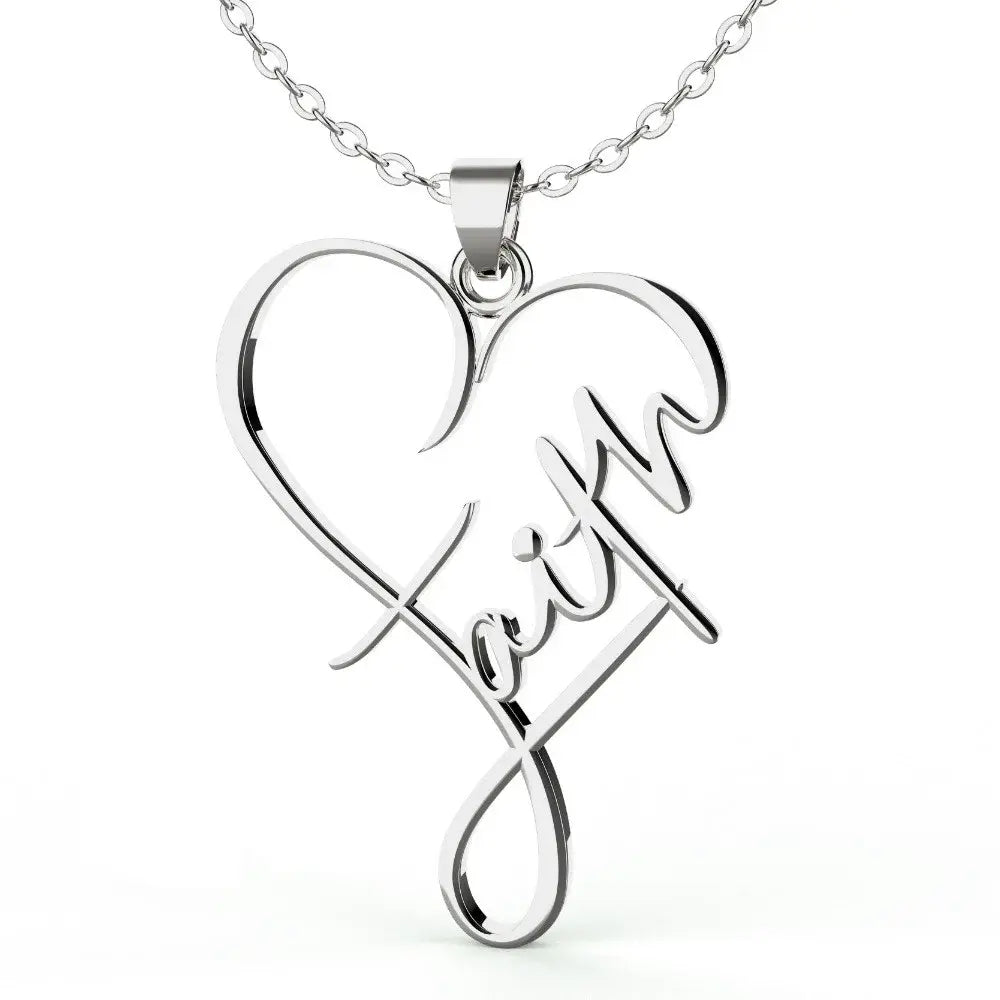
A saint costume fits the holiday's own calendar, since October 31 is the eve of All Saints' Day. Pick a saint with a clear signature: a brown hooded robe and rope belt for St. Francis, a tunic and cardboard armor for Joan of Arc, or a white gown with a crown of battery candles for St. Lucy. A plain faith script cross keeps the look modest, and a darker antique silver cross suits Joan of Arc's armor.
Queen Esther or Ruth
For Esther, use a purple or deep blue robe, a gold crown and a cardboard scepter, plus a small sign with her famous line, "for such a time as this" (Esther 4:14). For Ruth, wear a simple long dress and headscarf and carry a bundle of wheat from a craft store, perfect for a harvest festival. A gold pave cross gives Esther royal sparkle, while a script cross suits Ruth's quieter look. We skip costumes portraying Jesus or Mary, which many churches consider inappropriate for a party.
Armor of God
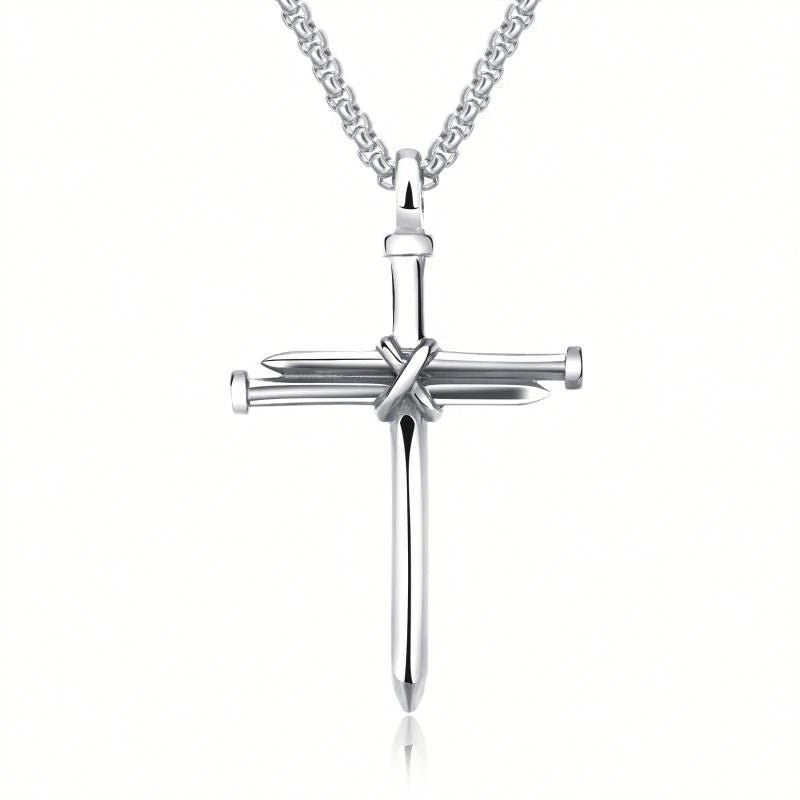
Ephesians 6 describes the belt of truth, the breastplate of righteousness, the shield of faith and the helmet of salvation. Build each piece from cardboard and silver paint over dark leggings and a tunic, with a label on each if the Bible study is meant to come along. A sturdy stainless steel and gold nail cross suits the warrior look.
Lantern bearer: "Let your light shine"
Wear a white or cream robe and a gold sash and carry a battery lantern, inspired by Matthew 5:14–16. A small sign reading "Let your light shine" makes it memorable. A battery lantern is the right choice, because an open flame has no place near a costume.
Fairy-tale princess
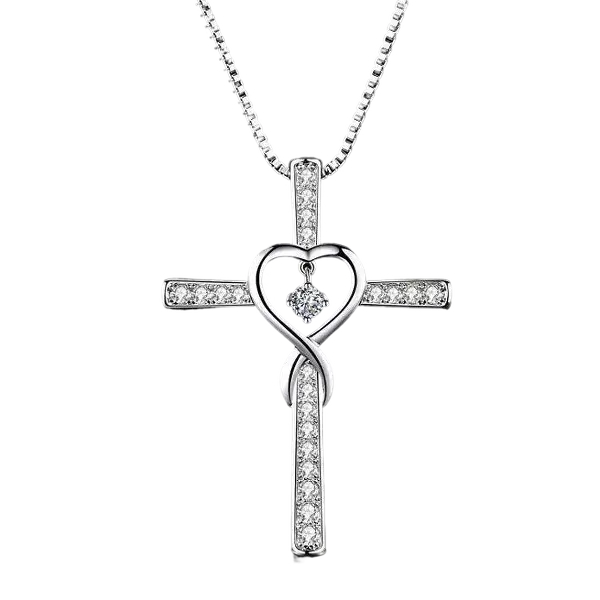
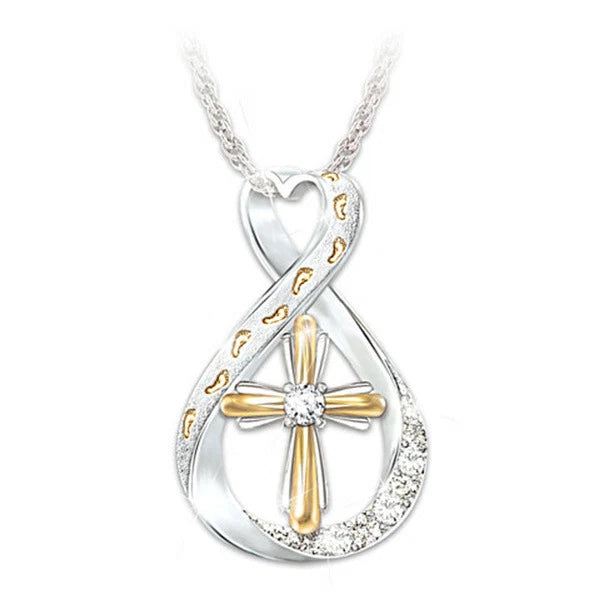
Start with a thrifted prom or bridesmaid dress, add a tulle underskirt for volume, and pick a palette from a story such as blue and gold or rose pink. Add gloves and a tiara or hair combs. An infinity heart cross comes in gold, silver and rose gold, so match the metal to the tiara rather than the dress. The infinity design pairs the cross with a second symbol, explained in what the infinity symbol adds to the cross.
Classic evening glamour
This look needs no character name and doubles as a dinner-party outfit later. Start with a black or champagne satin gown, add long gloves, pin curls and a deep red lip. A silver CZ pave cross sets small clear stones along the pendant so it catches the light.
Reformation Day reformer
Wear a black robe or long black dress with a white collar and carry a quill and a scroll titled "Ninety-five Theses." A plain silver cross fits the look, and the men's stainless steel cross necklace suits a partner in a matching costume.
Couples, groups and last-minute looks
Pairs and groups look best sharing one detail, such as a medieval court or a Bible story cast of Esther, a king and a shepherd. With one hour, a cat needs black clothes, headband ears and eyeliner whiskers, a cowgirl needs jeans, boots and a hat, and a ghost needs a sheet with large eye holes that stops above the ankles.
How to wear a cross necklace with a costume
Match chain length to the neckline. A 16 to 18 inch chain sits near the collarbone, 20 to 22 inches suits open necklines, and 24 inches or more works for layering.
Keep layered pendants under one inch so they stack without tangling.
Match the metal to the costume's hardware. Gold goes with halos and crowns, silver with armor.
Put the necklace on last, after makeup, hairspray and perfume.
Choose durable materials.Stainless steel resists tarnish over a long night.
Check the clasp first. Snags on tulle, scarves and wings are a common way for a chain to break, and why a cross necklace breaks covers the causes and what to do.
When a cross does not fit the costume
We do not suggest wearing a cross with a witch, vampire, demon or any character whose story opposes faith. Nobody is in trouble for loving those costumes. We would simply rather not treat a symbol many people wear every day as a prop. For those looks, a velvet choker, brooch or ring works well.
Halloween Costume Safety and Timing
Federal safety guidance says to look for the "Flame Resistant" label on costumes, masks, beards and wigs. Costumes sold at retail must meet flammability standards, and homemade looks are safer in nylon or polyester than in flimsy fabric with baggy sleeves or billowing skirts.
Add reflective tape to costumes and treat bags, and keep hems short enough to prevent tripping.
Make sure masks, hats and wigs never block vision, and test face makeup on a small patch first.
Give everyone a flashlight, use crosswalks, and have young children walk with an adult.
Check treats for allergens, and consider a teal pumpkin to show that non-food treats are available.
Respect a child who finds the night scary. A friendly costume and a bedtime story still count.
For timing, pick the look about three weeks ahead, order anything that has to ship about two weeks ahead, test the full outfit a week ahead and make final fixes the day before. Obsessed Believer ships free across the USA with delivery in 10 to 12 days, so an order placed by October 17 should arrive with a few days to spare. After that, thrift stores, the closet and the last-minute ideas above will get the look done.
Frequently Asked Questions
When is Halloween 2026?
Saturday, October 31, 2026. Halloween always falls on October 31.
What day of the week is Halloween 2026?
Saturday. It is the first Saturday Halloween since 2020.
How many days until Halloween 2026?
Count the calendar days to October 31 without counting today. In October, subtract today's date from 31.
When is the next Saturday Halloween after 2026?
2037. Halloween falls on a Friday in 2031 and 2036, so neither is a Saturday. The one after 2037 is 2043.
What time is trick-or-treating on Halloween?
The town decides. Two to three hours around sunset is common, and some Saturday windows start earlier. The city website or school newsletter usually lists the hours.
Do the clocks change on Halloween?
In the U.S. and Canada, no. They go back on the first Sunday in November, which is November 1 in 2026. UK and EU clocks change on the last Sunday of October.
Is there a full moon on Halloween 2026?
No. The full Hunter's Moon is October 26, and the next full moon on Halloween is in 2039.
Why is Halloween celebrated on October 31?
It is the vigil of All Saints' Day on November 1. The name means "holy evening."
Is Halloween a pagan holiday?
Debated and unproven. Many reference works link it to Samhain, and some historians dispute that link. The name and vigil are Christian.
Can Christians celebrate Halloween?
Sincere Christians answer differently. Some step back, some take part with care, and some reframe the night as a harvest or All Saints' celebration. Romans 14 invites grace in both directions.
What is the difference between Halloween, All Saints' Day and All Souls' Day?
Halloween is the vigil on October 31, All Saints' Day on November 1 honors the saints, and All Souls' Day on November 2 remembers the faithful who have died.
What are good Halloween costume ideas for women that are family-friendly?
An angel, a saint, Queen Esther or Ruth, the Armor of God, a lantern bearer, a fairy-tale princess or a classic evening-glamour look. Start from a thrifted base and add two or three accessories.
Can you wear a cross necklace with a Halloween costume?
Yes, with looks like an angel, saint, Bible heroine or evening glamour. Skipping it with characters whose story opposes faith is the better choice.
Is Halloween a federal holiday?
No. The federal calendar lists 11 holidays, and Halloween is not among them.
How is Halloween 2026 different from Halloween 2025?
The weekday moves from Friday to Saturday, and NRF forecasts $13.5 billion in spending against $13.1 billion, with $115.14 per person against $114.45. The moon is about 60% lit and rises late, the U.S. clocks go back on November 1 instead of November 2, and the costume mix widens beyond KPop Demon Hunters.
How much will Americans spend on Halloween in 2026 compared with 2025?
NRF forecasts $13.5 billion for 2026, up from a record $13.1 billion forecast for 2025. Both are survey-based forecasts of planned spending, not final sales.
What are the most popular Halloween costumes in 2026?
NRF's survey shows witches (4.8 million adults) and vampires (4.2 million) leading for adults and Spider-Man (4.6 million) leading for children. Spirit Halloween expects strong demand for Off Campus, Toy Story, KPop Demon Hunters, superhero and Greek mythology looks.
What happened on Halloween 2025?
It fell on a Friday, NRF projected a record $13.1 billion in spending, and KPop Demon Hunters characters took the top five places in Google's trending costume searches.
Halloween 2026 at a Glance: Key Dates, Facts and What to Do Before October 31
The dates. Halloween 2026 falls on Saturday, October 31, the first Saturday Halloween since 2020, and the next one is in 2037. All Saints' Day follows on Sunday, November 1, and All Souls' Day on Monday, November 2. U.S. and Canadian clocks go back at 2 a.m. on November 1, so Halloween night is still on daylight time, while UK and EU clocks change a week earlier, on October 25.
The meaning. The name Halloween means "holy evening," and the night began as the vigil before All Saints' Day. The name and the vigil are Christian, while the link to the Irish festival of Samhain is debated among historians, so the fairest summary is a Christian vigil that gathered many customs over the centuries.
The numbers. The National Retail Federation forecasts $13.5 billion in spending for 2026 against $13.1 billion for 2025, an average of $115.14 per person, with 74% planning to celebrate. These are forecasts from a September survey, not final sales, and a separate Deloitte survey also finds early shopping. Read the totals as steady rather than booming.
Before the night. Check your town's trick-or-treat hours, because no national authority sets them and some Saturday windows start earlier in the day or fall on another date. Buy trending or licensed costumes early, look for the "Flame Resistant" label, and bring a flashlight or add reflective tape, since the moon rises late this year. Set any manual clocks back on Saturday night; phones update on their own.
Ways to keep the night. Families keep Halloween differently: at the door with a bowl of candy, at a harvest or church event, or quietly at home remembering someone dear during Allhallowtide. Sincere Christians land in different places, and each of these choices can be made with care.
However you spend it, we wish you a safe and joyful Halloween. May the porch lights shine, the costumes stay comfortable, the treats go around and every neighbor be met with kindness.
From all of us at Obsessed Believer, happy Halloween.
Obsessed Believer sells faith-based jewelry, including the cross necklaces linked on this page, and has a commercial interest in them. The costume ideas work without any purchase. Statistics are forecasts where labeled. Corrections are welcome through the contact page, and the shop's background is on the Our Story page.

 FREE SHIPPING ALL OVER USA