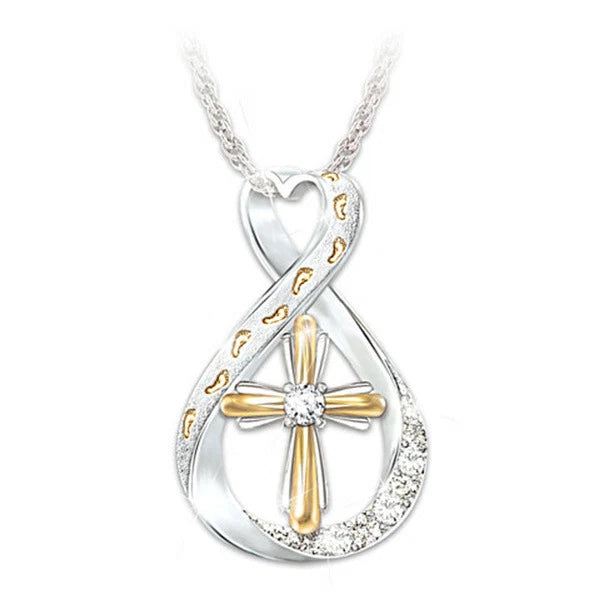
Ask ten Christian women why they wear a cross, a Scripture ring, or a small dove pendant, and the reasons will vary even when the jewelry looks similar. Pew Research Center's December 2023 survey on American spirituality found that 72% of Catholics keep a cross for spiritual reasons, compared with 42% of Protestants a gap wide enough to say plainly that Christian jewelry is not one habit but several, shaped as much by tradition as by taste. The same survey found Catholics considerably more likely than the general population to keep jewelry specifically for spiritual purposes (30%, against 19% of all U.S. adults), which points to something the marketing copy around faith jewelry rarely gets into: for a meaningful share of the women who wear it, this isn't a style choice sitting alongside their other accessories. It functions closer to a habit of devotion that happens to take the form of jewelry.
Quick Answer
Christian jewelry for women covers any piece necklace, ring, earring, or bracelet that carries a symbol or message tied to the Christian faith, most commonly a cross, but also the ichthys (fish), a dove, an anchor, a Trinity knot, or a personally chosen Scripture verse. What a specific piece communicates, and how it's worn, varies by tradition: Catholic and Orthodox jewelry leans toward the crucifix, devotional medals, and pieces tied to specific prayer practices, while Protestant jewelry more often favors the bare cross and Scripture-engraved pieces. Across all of them, the point has less to do with the accessory and more to do with what a woman already believes, made visible in something she puts on every day.
This guide works through what actually falls under christian jewelry for women the specific symbols beyond the cross, how they differ by denomination, and how a woman decides which one belongs on her, not as a gift picked out for someone else, but as an ordinary part of getting dressed.
What Actually Counts as Christian Jewelry?
Christian jewelry for women is a broad label that ends up covering two different things, and it's worth separating them before going further.
The first is symbolic jewelry: a piece carrying a recognizable Christian image or word a cross, a fish, a verse worn the same way anyone wears a pendant that means something to them. The second is what Catholic and Orthodox tradition specifically calls a sacramental: an object that has been blessed, is tied to a particular devotion, and is understood to support prayer rather than simply decorate the wearer, such as a rosary ring or a Miraculous Medal. Protestant tradition generally doesn't use that sacramental framework at all, which is part of why a bare cross carries slightly different weight in a Baptist congregation than a crucifix does in a Catholic one, even though both women would describe themselves as wearing christian faith jewelry.
There's also a long-running conversation inside Christian circles about the line between the two. Some writers and pastors argue the cross was never meant to double as decoration that wearing it means something only alongside an actual commitment to what it represents, not as a pretty trinket picked for how it photographs. Others point out that a small, quiet cross worn daily is itself a form of witness, precisely because it doesn't need to be explained to do its work. Both views show up across the traditions covered below, and neither is universal, which is exactly why the right piece of religious jewelry for one woman can look completely different from the right piece for another.
The Core Symbols of Christian Jewelry for Women and What Each One Means
The cross covers only part of the picture. Christian cross jewelry sits inside a much wider vocabulary of symbols, several of them older than most people expect.
The Cross vs. the Crucifix
The cross remains the most universal starting point, but it splits into two distinct pieces depending on tradition. A bare cross just the shape, no figure is the standard in most Protestant jewelry, and it tends to put the emphasis on the resurrection: what came after the cross, not only what happened on it. A crucifix includes the figure of Christ, and it's the more common choice in Catholic and Orthodox jewelry, where keeping the crucifixion itself visible is treated as part of the point rather than something to move past.
Orthodox tradition adds a further layer: infants and adult converts typically receive a cross at baptism meant to be worn continuously from that point on, often tucked under a shirt rather than displayed. For a deeper look at where the symbol comes from and why people wear it, the cross's origin story goes further into that ground than fits here.
The Ichthys (the Jesus Fish)
Long before the cross became jewelry, early Christians used a simpler mark to recognize each other during periods of persecution under the Roman Empire: two overlapping arcs forming the outline of a fish. The Greek word for fish, ichthys, doubled as an acronym for "Jesus Christ, Son of God, Savior," which made it a way to profess faith without saying anything out loud. It shows up in catacomb art from the 1st and 2nd centuries, tied loosely to Jesus calling his disciples to become "fishers of men" and to water as an image of baptism. As jewelry today, it reads as understated almost to the point of going unnoticed by anyone who doesn't already know what it means which is exactly why some women choose it over a cross.
The Dove
A dove represents the Holy Spirit, most directly through the Gospel account of Jesus's baptism, where the Spirit is described descending onto him "like a dove." It carries a second layer of meaning from much earlier in the Bible: the dove Noah sent out that returned with an olive branch, read for centuries as a symbol of peace and a promise kept. In jewelry, a dove pendant or a pair of dove earrings tends to be chosen less as a broad statement of belief and more as a quiet marker of peace, comfort, or a specific season someone is walking through.
The Anchor
The anchor's Christian meaning traces to a single verse, Hebrews 6:19, which describes hope as "an anchor of the soul, both sure and steadfast." Long before it meant anything decorative, the shape served a practical purpose: an anchor drawn with a crossbar doubled as a disguised cross, letting believers mark graves and meeting places during periods when an open cross would have been dangerous to display. Archaeologists have found anchor carvings in the Roman catacombs dating to the 1st century, making it one of the oldest Christian symbols still in circulation. It stays associated specifically with steadiness through hardship, which is part of why some denominations still present an anchor cross to people being sent into difficult or uncertain work.
Trinity Symbols
A few different designs represent the Trinity three persons, one God and none of them started out as exclusively Christian. The Trinity knot, or triquetra, is an old Celtic design of three interwoven loops with no visible start or end point, later adopted into Christian jewelry as a picture of the Father, Son, and Holy Spirit as distinct yet inseparable. Three interlocking circles serve a similar purpose in a simpler form. Both show up more often in rings and small pendants than in statement pieces, largely because the symbolism depends on the design reading as continuous and unbroken.
Alpha and Omega
Alpha and omega are the first and last letters of the Greek alphabet, and in the Book of Revelation, Jesus applies both to himself as a way of describing something outside ordinary time the beginning and the end at once. Paired with a cross, or worn on their own as two small charms, the letters are a common way to mark permanence: the idea that faith doesn't come with an expiration date attached.
Scripture and Bible Verse Jewelry
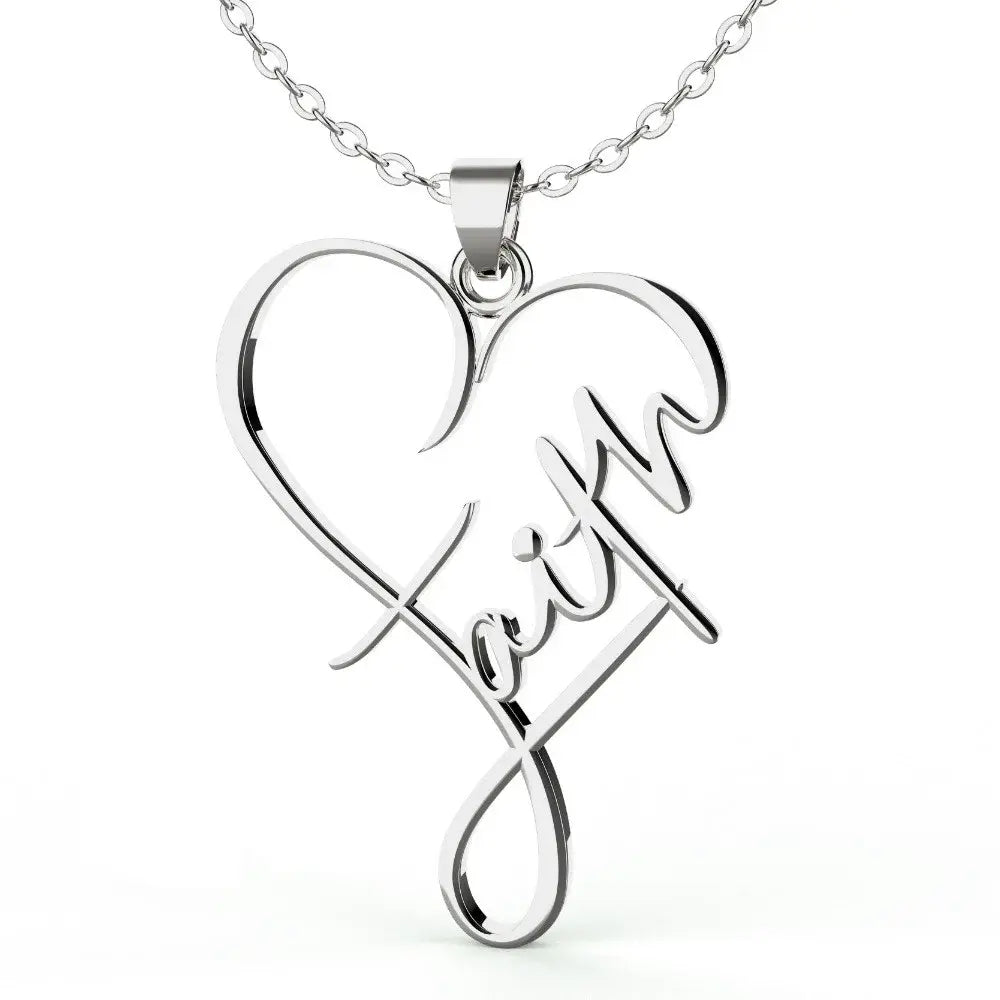
Personalized Scripture jewelry has become one of the fastest-growing categories inside christian jewelry for women, and it works differently from a symbol: instead of a shared image everyone reads the same way, it's usually one specific verse chosen because of what it means to the woman wearing it. Jeremiah 29:11, Philippians 4:13, Psalm 23, and Proverbs 31:25 turn up often enough to be considered current standards, generally because each ties to a specific kind of season uncertainty, endurance, grief, or personal identity rather than a general statement of belief. A verse necklace or engraved bar bracelet tends to function less like a public symbol and more like a private one: most people who see it won't immediately know what it references, which is often exactly the point for the woman wearing it.
| Symbol |
Core Meaning |
Most Common Form |
| Bare cross |
Faith broadly, with emphasis on the resurrection |
Necklace pendant, stud earrings |
| Crucifix |
The crucifixion itself and Christ's sacrifice |
Necklace, rosary |
| Ichthys (fish) |
Early, quiet profession of faith |
Small pendant, charm |
| Dove |
The Holy Spirit; peace and comfort |
Necklace, earrings |
| Anchor |
Hope and steadiness through hardship (Hebrews 6:19) |
Pendant, charm bracelet |
| Trinity knot |
Father, Son, and Holy Spirit as one |
Ring, small pendant |
| Alpha & Omega |
God as the eternal beginning and end |
Paired charms |
| Scripture / verse |
A specific, personally chosen Bible verse |
Bar necklace, engraved ring or bracelet |
| Miraculous Medal |
Marian devotion and intercession (Catholic) |
Medal necklace |
| Nail cross |
The crucifixion nails specifically |
Pendant |
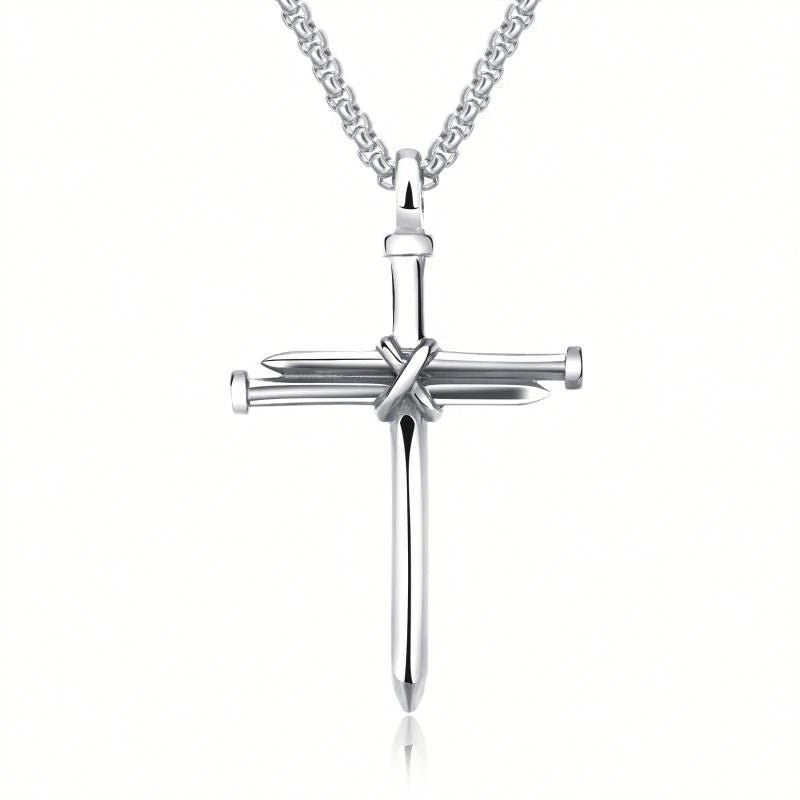
One variation worth flagging on its own: the nail cross, built around the nails used at the crucifixion rather than the cross shape itself, carries a narrower and more specific symbolism than a general cross does something our what the nail cross means covers in full if a piece built around it catches your eye.
How Denomination Shapes Christian Jewelry for Women
Catholic
Catholic jewelry draws on a wider vocabulary than the cross alone, because Catholic tradition treats certain blessed objects sacramentals as tools that support prayer rather than pure decoration. The Miraculous Medal, tied to a reported 1830 vision to St. Catherine Labouré in Paris, is one of the most commonly worn Marian devotionals, alongside the scapular medal, a wearable stand-in for the cloth brown scapular associated with devotion to Our Lady of Mount Carmel. The St. Christopher medal, worn for protection while traveling, is common enough to be its own category, and it's frequently combined with two or three other devotions into a single four-way or five-way medal. Rosary rings a full decade of beads or knots shaped into a ring worn on one finger let a woman keep a rosary within reach without carrying the full strand, which matters for anyone trying to pray during a commute rather than in a dedicated block of time.
Pew Research's spirituality survey found 30% of Catholics keep jewelry specifically for spiritual purposes, well above the 19% figure for U.S. adults overall, and 72% keep a cross for the same reason, against 42% of Protestants numbers that track closely with how much more devotional jewelry Catholic tradition tends to produce in the first place.
Protestant
Protestant jewelry for women leans toward the bare cross, Scripture, and simpler symbols, generally without the medal-and-sacramental vocabulary Catholic jewelry draws on. Part of that comes down to theology: most Protestant traditions don't treat physical objects as carrying spiritual power on their own, which shifts the emphasis toward what a piece represents rather than what it's believed to do. The WWJD bracelet is the clearest modern example of that instinct. The phrase "What Would Jesus Do?" comes from Charles Sheldon's 1896 novel In His Steps, but the bracelet itself started in 1989, when a youth pastor in Holland, Michigan began giving woven wristbands to her group as a plain, physical prompt to stop and think before acting. By the mid-1990s it had spread far beyond church youth groups into mainstream fashion, and variations of it are still made today, alongside a broader current trend toward Scripture-engraved bars, rings, and bracelets that serve a similar function a private prompt rather than a public statement.
Orthodox
Eastern Orthodox jewelry centers on a specific design: a cross with three horizontal bars instead of one, where the top bar represents the inscription placed above Christ on the cross, and the lower, slanted bar represents a footrest, tilted to mark the two thieves crucified beside him. In Russian Orthodox tradition specifically, that design traces back to the Apostle Andrew's preaching in the region. What sets Orthodox practice apart from a purely stylistic choice is how the cross is given: infants are baptized with a cross meant to be worn continuously from that point on, not saved for church attendance or special occasions, and it's traditionally worn under clothing rather than as a visible accessory. That's a genuinely different relationship to the object than "jewelry" usually implies closer to something inseparable from the person than something coordinated with an outfit.
Personal, Non-Denominational Faith
A large and growing share of religious jewelry for women doesn't map neatly onto any one denomination at all. A woman who grew up in one tradition, married into another, or simply doesn't attend a specific church regularly still wants a way to wear what she believes, and the market has responded with pieces built around Scripture, general symbols like the dove or the fish, and minimalist crosses that don't lean Catholic or Protestant in either direction. That's less a theological statement than a practical one: the symbol still has to mean something to the person wearing it, whether or not it maps to a specific congregation's practice.
Necklaces, Rings, Earrings, and Bracelets
Necklaces: The Default Starting Point
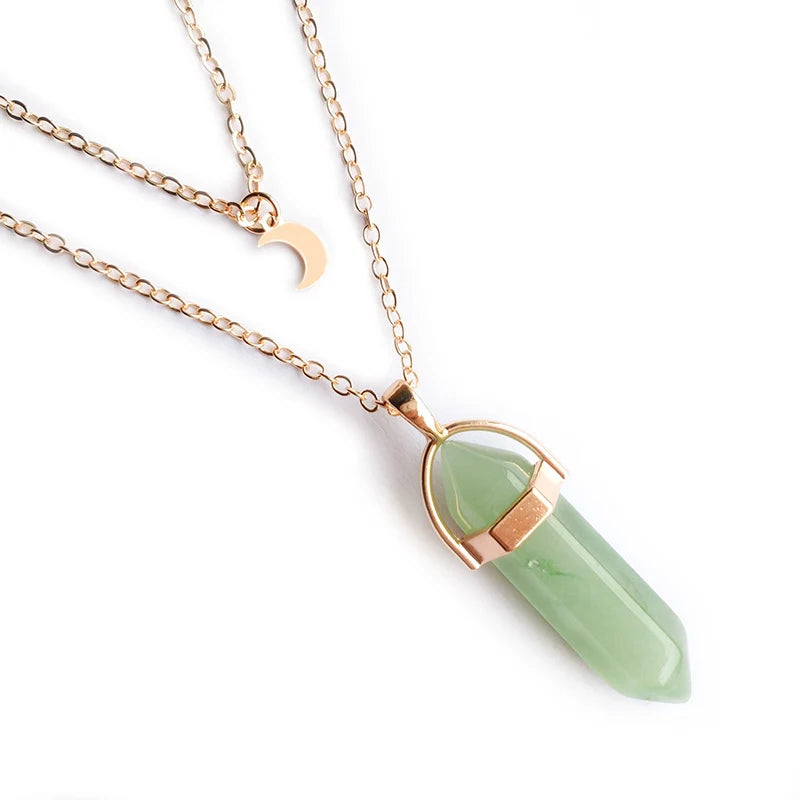
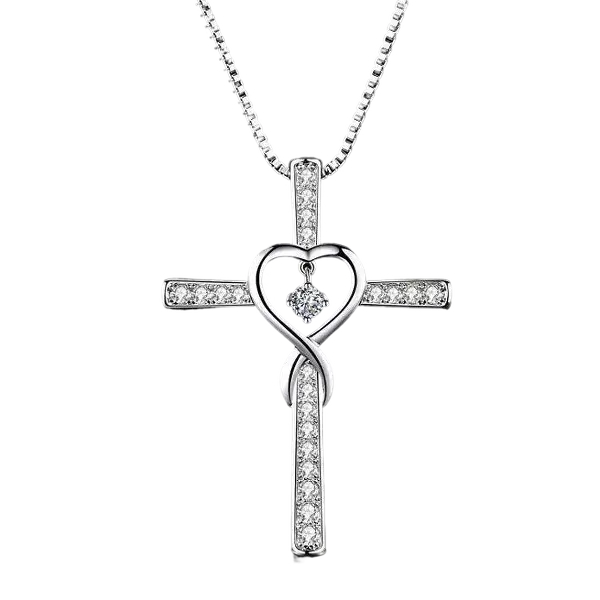
A necklace stays the most common form of christian jewelry for women for a simple, structural reason: a pendant sits at the base of the throat, visible in a mirror throughout the day without requiring a glance down the way a ring does, and close enough to the skin that many women describe feeling it rather than just seeing it. A cross necklace covers the widest range of styles inside that category, from a bare, understated pendant to a piece layered with a heart, an infinity symbol, or stones each combination carries its own added meaning, worth a look in our heart cross symbolism before you choose one.
Rings: Faith on the Hand You Already Look At
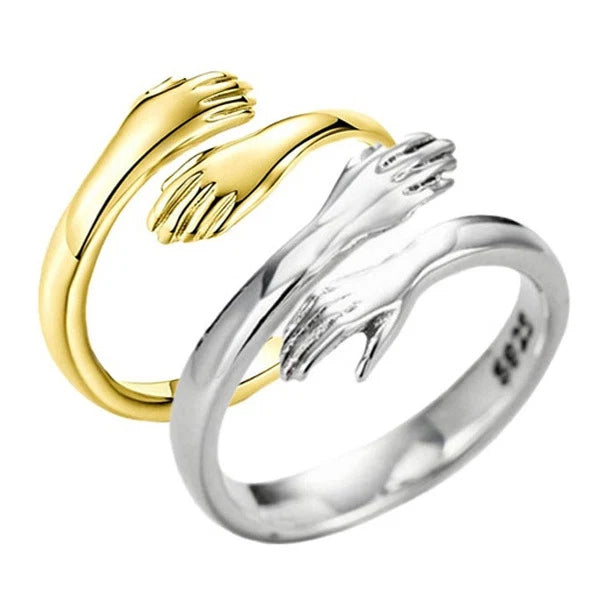
A ring solves a different problem than a necklace. It isn't always visible to other people, but it's constantly visible to the person wearing it, which is part of why Scripture-engraved bands and small Trinity-knot rings have grown into their own category rather than staying a substitute for a necklace. A faith ring also works for women who can't wear a necklace for work, medical, or comfort reasons, without losing that daily, close-up presence.
The purity ring is the category's most historically specific example. Popularized in the United States by the True Love Waits movement in the early 1990s, it started as a plain band worn by teenagers and young adults as a personal pledge of chastity before marriage, often engraved with a verse or the words "true love waits." The style has broadened since then plenty of women now wear one as a general promise ring tied to a season of faith rather than a dating pledge specifically but the ring format still carries that original layer of meaning for a lot of the women who choose it, in a way a necklace with the same engraving usually wouldn't.
Earrings: The Quiet Option
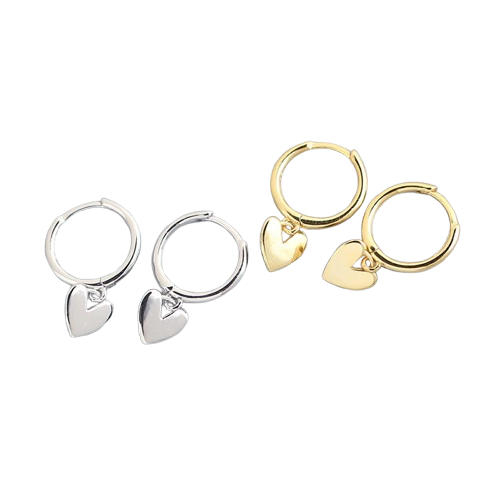
Earrings solve a dress-code problem more than a devotional one. A small stud or huggie cross reads as understated enough for settings where a visible necklace wouldn't fit, and it's easy to keep on through a full day without thinking about it, since there's no clasp or chain to catch on clothing. An earrings collection built around faith symbols typically runs from a plain cross stud to fish, dove, and heart-cross designs, generally sized smaller than the equivalent necklace pendant.
Bracelets: Built Around Repetition
Bracelets carry Christian jewelry's most explicitly habit-forming design: a WWJD band, a Scripture-engraved cuff, or a rosary bracelet is meant to be looked at, touched, or turned on the wrist repeatedly through a day, in a way a necklace pendant sitting flat against the chest generally isn't. That's less about the symbol itself and more about the physical mechanics of where it sits closer to a quiet, recurring prompt than a piece meant to be seen by other people first.
Choosing a Piece That Reflects Your Own Faith
Buying Christian jewelry for yourself is a different decision than buying it as a gift, mostly because you're the only one who has to be satisfied with what it means, not a recipient guessing at your intentions. A few questions tend to narrow it down faster than browsing a full collection.
Which symbol actually matches what you're trying to say?
A bare cross reads as a general statement of faith. An anchor says something more specific about hope through a hard season. A Scripture piece says something more specific still, tied to whichever verse you picked. There's no wrong answer here, but there is a mismatch worth avoiding: choosing a symbol because it's popular rather than because it means the thing you actually want it to mean.
Does it fit how your tradition treats the object?
If you were raised Catholic or Orthodox, a bare, Protestant-style cross might feel like it's missing something. If you weren't, a crucifix or a devotional medal might feel like it's saying more than you intend. Neither is a mistake, but it's worth being aware of the difference before you buy rather than after.
How visible do you actually want it to be?
A necklace pendant sits differently in a professional setting than a ring does, and a small stud earring is a different decision entirely from a statement piece meant to be noticed. This is a personal call, not a theological one.
Will you actually wear it daily, and what does that require of the material? A piece meant to come off after a single event doesn't need to survive much. A piece meant to become part of your everyday routine showers, workouts, sleep needs a material that can handle that without your having to think about it a question our stainless steel breakdown works through in more depth than fits here. Chain length and pendant sizing matter just as much for how a piece actually looks on you day to day, covered in our chain length and fit.
Building a Faith Jewelry Collection Over Time
Christian jewelry for women rarely arrives all at once. For a lot of women, it accumulates the way any meaningful collection does: a baptismal cross given in infancy, a small pendant added at confirmation or a first communion, a ring or bracelet picked up during a specific hard year, a Scripture piece chosen for a season that mattered enough to want a permanent marker of it. Layering several pieces at once, then, isn't primarily a styling decision it's often just what happens when a woman keeps something from each stage rather than replacing the last piece with the next one.
That accumulation does raise a practical question worth answering honestly: wearing several pieces together works better when they don't compete for attention. A single statement necklace paired with small stud earrings tends to hold together better than two large pendants layered on the same chain, and mixing metals tends to read as intentional only when one piece is clearly the focal point rather than all of them vying equally. None of that changes what any individual piece means it's a practical note about how several meaningful things end up sitting on one person at once, not a rule about which pieces are more valid than others.
It's also worth saying plainly that a lot of religious jewelry for women moves between people, not just through one woman's own life stages a cross passed down from a grandmother, a Scripture ring given at a specific milestone. When you're the one choosing something to give rather than to wear yourself, that's a genuinely different set of questions, covered separately in our Christian gift ideas.
Frequently Asked Questions
What is Christian jewelry called?
There's no single official term. "Christian jewelry,""faith jewelry," and "religious jewelry" are used interchangeably in everyday language, though Catholic and Orthodox tradition has a more specific word for blessed devotional pieces: sacramentals. A cross, a Scripture ring, or a dove pendant all fall under the broader christian jewelry umbrella regardless of which term gets used to describe them.
Is it against the Bible for a Christian woman to wear jewelry?
There's a genuine range of views here rather than one settled answer. Passages like 1 Timothy 2:9 and 1 Peter 3:3-4 are sometimes read as a caution against elaborate adornment, and some Christian traditions take that reading seriously. Others read the same passages as being about vanity and priorities rather than jewelry itself, and see a simple cross or Scripture piece as compatible with or even an expression of that same caution against vanity. Isaiah 61:10 is often raised in that second camp, since it uses a bride adorned in her jewels as a positive image of joy rather than a warning, which is part of why many Christian women read the caution passages as being about the heart behind the jewelry rather than jewelry itself. Denominational teaching and personal conviction both factor in, and it's worth reading the passages in the context of your own tradition rather than assuming one universal Christian position.
What's the difference between a cross and a crucifix?
A cross is the bare shape on its own. A crucifix includes a figure of Christ on it. Protestant jewelry generally favors the bare cross; Catholic and Orthodox jewelry more often includes the crucifix, since keeping the crucifixion visibly present is considered meaningful rather than something to move past.
What is the most popular piece of Christian jewelry for women?
The cross necklace remains the single most searched-for and most worn piece by a wide margin, largely because it works across nearly every Christian tradition without needing an explanation. Scripture-engraved jewelry and dove pendants have grown quickly as more specific alternatives, but the cross is still the default starting point for most women choosing their first piece.
What does the fish symbol mean on Christian jewelry?
It's called an ichthys, from the Greek word for fish, and it doubles as an acronym for "Jesus Christ, Son of God, Savior." Early Christians used it as a quiet way to identify each other during periods of persecution in the Roman Empire, and it's remained in use ever since as a subtler alternative to the cross.
Do you have to be Catholic to wear a rosary ring or a devotional medal?
No plenty of non-Catholics wear a Miraculous Medal or a rosary ring purely as jewelry, without the devotional practice behind it. That said, within Catholic tradition specifically, these pieces are meant to support an actual prayer practice, so a Catholic woman wearing one is generally engaging with it differently than someone wearing the same piece purely for its look.
What metal holds up best for everyday Christian jewelry?
Stainless steel and titanium are generally the two materials built to survive daily wear showers, workouts, sweat without a maintenance routine attached, unlike plated finishes, which can wear thin, or sterling silver, which needs regular polishing to avoid tarnish. The right choice ultimately depends partly on skin sensitivity and partly on how the piece will actually be worn day to day.
Can men wear Christian jewelry too, or is it only made for women?
The symbols themselves aren't gendered a cross, a fish, or an anchor carries the same meaning regardless of who wears it. What tends to differ is design: women's Christian jewelry generally runs smaller and more delicate, while men's pieces lean toward bolder pendants and sturdier chains, but the underlying meaning doesn't change based on who's wearing it.
How do I know which Christian symbol is right for me?
Start with what you're actually trying to say rather than what's popular. A bare cross communicates general faith; an anchor points specifically to hope through hardship; a Scripture piece ties to one particular verse that means something to you; a dove leans toward peace or comfort. The right piece is the one whose meaning you'd still be able to explain a year from now, not necessarily the one that's trending.
Faith You Can Wear Every Day
Strip away the branding around any of this, and christian jewelry for women comes down to a genuinely old idea: carrying something you believe where you can feel it, not just where other people can see it. That's true whether it's a bare Protestant cross, a Catholic medal blessed for a specific devotion, an Orthodox baptismal cross tucked under a collar, or a Scripture ring engraved with a verse nobody else would recognize without asking. None of these pieces do the believing for the person wearing them they're a marker of something already there, made small enough to put on in the morning without thinking twice about it. Choosing one well starts with knowing what you actually want it to say, and ends with wearing it long enough that it stops feeling like jewelry at all.

 FREE SHIPPING ALL OVER USA