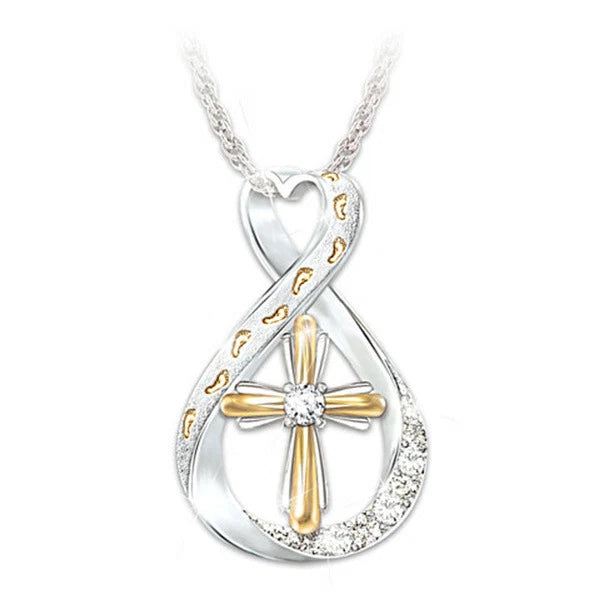
A cross necklace only earns its place as a daily habit if it can actually survive daily life. Pew Research Center's December 2023 survey on American spirituality found that 36% of U.S. adults keep a cross for spiritual reasons well ahead of jewelry kept for spiritual purposes generally (19%), crystals (12%), or a tattoo or piercing kept for spiritual reasons (9%). For a piece worn that consistently, resting against skin through showers, workouts, layers of clothing, and years of ordinary wear, the metal behind it stops being a small styling detail and becomes the difference between a necklace a woman reaches for every morning without thinking and one that ends up in a drawer after a few months.
That's the case for stainless steel specifically. This guide works through what the material actually is, how to verify a listing is telling the truth about it, how it stacks up against every other metal used in cross jewelry, and where its real limits are cross-checked against materials-science sourcing and published research rather than repeated marketing language, because that's the only way a decision like this one actually holds up.
Quick Answer
A stainless steel cross necklace for women is made from an iron-chromium alloy, usually 304 or 316L grade, that forms a thin, self-repairing chromium oxide layer on its surface. That layer is what blocks rust and tarnish through showers, sweat, and years of daily contact, in a way a plated gold or silver finish physically cannot, since plating is a coating that wears through rather than a property of the metal itself. It does contain some nickel, but bound tightly into the alloy rather than sitting loose on the surface, which is why many women with mild metal sensitivity tolerate it well. For a piece meant to be worn every day rather than saved for occasions, that combination real corrosion resistance plus a care routine that amounts to an occasional wipe with a cloth is the entire case for stainless steel.
What “Stainless Steel” Actually Means in a Cross Necklace
Stainless steel names a specific, defined alloy family, not a marketing description for any shiny silver-colored metal. At its core, it's iron combined with a meaningful share of chromium, typically in the 16 to 18 percent range for the grades used in jewelry. That chromium reacts with oxygen in the air to form an extremely thin, invisible layer of chromium oxide across the metal's surface. This passive layer is what blocks rust and corrosion, and it has a property most other finishes don't: if the surface gets scratched, the oxide layer reforms on its own within hours, rather than leaving exposed metal behind the way a scratch through gold plating does.
Two grades dominate cross necklace listings, and the difference between them is worth actually understanding rather than treating as interchangeable marketing terms.
304 stainless steel, sometimes labeled 18/8 for its roughly 18% chromium and 8% nickel content, is the standard grade behind most everyday jewelry, watch cases, and kitchen hardware. It's chosen for a solid, proven balance of strength, shine, and corrosion resistance, and it's what most stainless steel cross necklaces are actually made from.
316L stainless steel builds on that same chromium-nickel base and adds 2 to 3 percent molybdenum, along with a lower carbon content (the “L” stands for low-carbon). Molybdenum meaningfully improves resistance to chlorides the technical term for the salts found in sweat, pool water, and seawater which is why 316L carries the nickname “surgical” or “marine” grade. It belongs to the same alloy family used in biomedical implants, some of it certified to standards like ASTM F138, and in marine hardware, chosen specifically because it holds up to prolonged, close contact with skin and water.
One clarification worth making plainly, since the two get confused often: a “925” or “sterling” stamp refers to sterling silver, a completely different material 92.5% pure silver alloyed with other metals for strength with a completely different care profile. Genuine stainless steel doesn't carry a 925 stamp, and it won't develop the black tarnish sterling silver does over time. If a listing uses “silver” only as a color description without naming an actual base metal, it's worth reading the full product description before assuming, since stainless steel, silver-tone plating, and sterling silver are three different materials that happen to look identical in a photo.
Obsessed Believer's stainless steel collection is built specifically around this material, so every design in it starts from the same rust-resistant, tarnish-resistant base described above.
How to Verify You're Actually Getting Stainless Steel
This is the part most buying guides for this material skip entirely, and getting it right matters more than any other single decision in this purchase.
The Magnet Test Doesn't Prove What Most People Think
A popular home test is holding a magnet to a piece of jewelry: if it sticks, the assumption is that it's “fake” or low-grade stainless steel; if it doesn't, the piece is assumed genuine. That test is unreliable in both directions. The 304 and 316L grades used in jewelry are austenitic stainless steel, a molecular structure that's naturally non-magnetic or only very weakly magnetic in its normal state. But that same structure can develop a slight, partial magnetism after cold-working the bending, stamping, and shaping that turns raw steel into a pendant, jump ring, or clasp without the alloy itself changing at all. Materials engineers and stainless steel industry references are consistent on this point: magnetism in a finished piece is a property of manufacturing history and internal crystal structure, not a purity or quality indicator. A genuine 316L cross that shows a faint pull toward a strong magnet, especially near a soldered join or a stamped detail, is still genuine 316L. The test tells you almost nothing reliable either way.
What Actually Confirms the Material
Three checks are worth more than a magnet or a color name:
Read the material line in the actual product description, not just the title or the photo caption. A trustworthy listing states the base metal plainly “316L stainless steel” or “304 stainless steel” rather than leaning on a color word like “silver” by itself.
Look for a grade number, not just the word “stainless.” Stainless steel is a family of dozens of distinct alloys; a listing that names 304 or 316L specifically is telling you something a listing that just says “stainless” isn't.
Confirm a hypoallergenic or nickel-free claim directly in the description if sensitivity matters to you, rather than assuming it from the word “stainless” alone, since finish and grade can vary even within one jeweler's own catalog.
Stainless Steel vs. Every Other Cross Necklace Metal
Placed next to the other materials common in cross jewelry, the practical differences stop being a matter of whose marketing copy sounds most convincing.
The honest summary: stainless steel and titanium are the two materials actually built to survive genuine daily wear without a maintenance routine attached to them. Titanium pulls ahead specifically for a documented, severe nickel allergy. For virtually everyone else, stainless steel 316L in particular delivers nearly identical durability at a meaningfully lower price point, with a denser, more substantial feel in the hand that a lot of wearers actually prefer.
Built for Real Life: Why It Holds Up to Daily Wear
The biggest practical difference between stainless steel and a plated finish comes down to what's actually on the surface. Gold-tone or silver-tone plating is a thin decorative layer over a different base metal; with enough daily contact, sweat, and friction, that layer eventually wears thin and the base metal underneath starts to show through, usually as a dulling or a slight color shift. Stainless steel doesn't run into that problem, because the corrosion-resistant chromium layer isn't a coating sitting on top of something else it's a property of the metal itself, present all the way through.
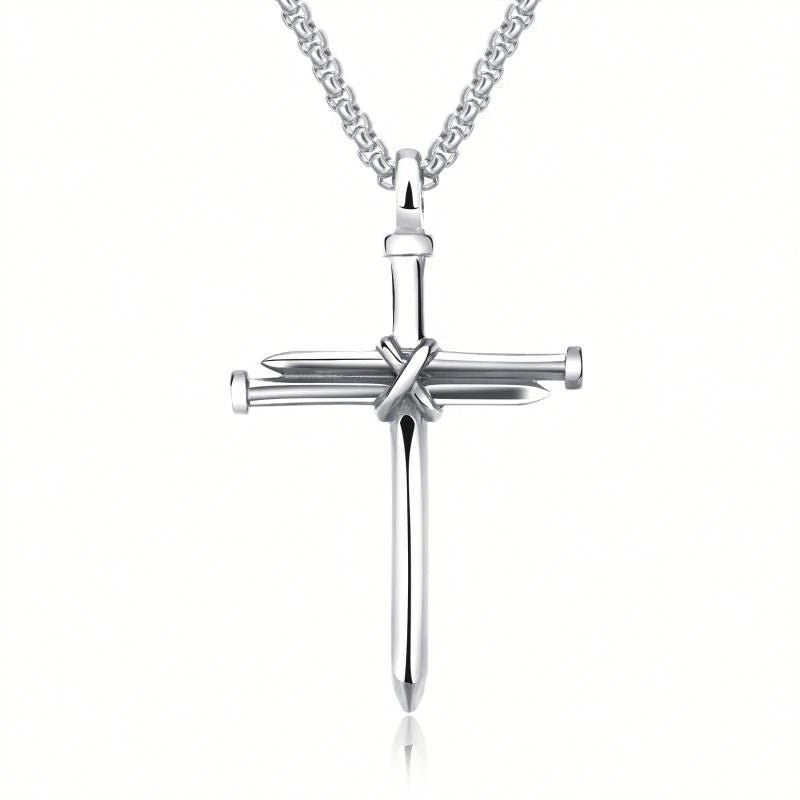
That structural difference is what lets a piece like a stainless steel nail cross go from morning coffee to a full workday to a workout without the wearer thinking twice about it. Independent materials guides consistently rank stainless steel particularly 316L alongside titanium as among the metals best suited to genuinely water-resistant, sweat-resistant daily wear, in contrast to plated pieces or softer metals that need to come off before exercise or a shower.
That said, “resistant” is a more honest word than “indestructible.” In rare cases, prolonged exposure to concentrated chlorides continuous saltwater immersion, or chlorine trapped in a tight spot like under a clasp can cause localized pitting even on marine-grade steel, which is exactly why the general guidance from jewelers is consistent across materials: a quick rinse and dry after swimming keeps the finish brighter for longer, even on a metal built to handle it. The table below breaks this down by activity.
| Activity |
How It Holds Up |
| Shower |
Fine to wear through. Dry the pendant afterward to prevent water spots. |
| Sleeping |
Fine for daily wear; some women still prefer to remove any necklace overnight for comfort. |
| Workouts and sweat |
Handles sweat well. Rinse it off after an intense session. |
| Swimming pool (chlorine) |
Generally fine occasionally; frequent or prolonged exposure calls for a fresh-water rinse after. |
| Ocean or saltwater |
The most demanding condition for any metal. Rinse promptly with fresh water afterward. |
| Perfume and lotion, direct contact |
Best kept off the pendant itself; residue buildup dulls the finish on any metal over time. |
Is a Stainless Steel Cross Necklace Hypoallergenic?
Skin sensitivity is one of the most common practical reasons women look specifically for stainless steel jewelry, and the underlying science backs that instinct up, with one honest caveat.
Nickel allergy is genuinely common. According to the Nickel Institute, on average 15 to 16% of women and 4 to 5% of men are nickel-sensitized, a gap researchers largely attribute to women's greater historical exposure through jewelry and ear piercings. For someone in that group, the metal behind a piece worn constantly against skin matters enormously.
Stainless steel does contain nickel, typically in the 8 to 10 percent range depending on the grade, so it isn't accurate to call it nickel-free. What makes it different from cheap costume jewelry is how that nickel behaves: it's locked tightly into the alloy's molecular structure rather than sitting loosely on the surface, which sharply limits how much of it can actually transfer to skin. In 316L specifically, the added molybdenum reinforces that locked structure further, which is part of why 316L is the grade most often recommended for anyone with known sensitivities or for jewelry meant for constant, prolonged skin contact.
This is genuinely different from titanium, which contains little to no nickel and triggers a confirmed reaction in only a small fraction of wearers, well below the rates reported for nickel, according to clinical and industry sources making it the more cautious choice for someone with a confirmed, severe allergy. For the much larger group of women who simply find that cheap fashion jewelry irritates their skin without a formal diagnosis, well-made stainless steel is usually enough to solve the problem on its own. If you have a documented nickel allergy, it's worth checking a specific listing's material description directly before buying, rather than assuming the words “stainless steel” alone guarantee zero reaction.
Faith, Protection, and Remembrance: What the Cross Still Carries
A cross necklace communicates something a plain pendant doesn't, and the reasons a woman puts one on tend to fall into a few recurring categories.
Faith
For most women who wear one, the cross is simply a quiet, visible marker of belief, worn the way it has been for centuries not as a statement piece, but as a small, constant part of getting dressed. Pew Research Center's 2023-24 Religious Landscape Study, released in 2025, found that 62% of U.S. adults currently identify as Christian, a share that has held relatively steady since 2019 after a longer decline. For a large part of that group, a cross necklace is less a fashion choice than a habit something put on in the morning the same way a wedding ring or a watch goes on, present so consistently it stops feeling like a decision.
Protection
A lot of people describe a cross necklace as something that makes them feel protected, and it's worth being precise about what that means. No mainstream Christian tradition teaches that the metal itself wards anything off; the more accurate way to think about it is that the necklace functions as a physical anchor for a belief the wearer already holds a small, tangible reminder of something bigger than a difficult moment, rather than an object with power of its own. That distinction matters, and it's also exactly why the piece needs to be durable enough to actually stay on through the hard days it's meant to accompany.
Remembrance
A cross necklace is also one of the most common ways people mark a specific moment a baptism, a confirmation, a loss, a recovery, an anniversary of something that mattered. Because it's meant to be worn rather than displayed, a piece that can go through years of ordinary life without deteriorating is what turns a gift into a keepsake instead of something set aside once the occasion passes. Stainless steel's durability is part of what makes that kind of long-term remembrance piece realistic in a way a delicate plated finish generally isn't. For the fuller picture of why people choose to wear one in the first place, this look at the reasons behind the habit goes deeper than fits here.
Choosing the Right Stainless Steel Cross Necklace
Once the material is settled, a few practical details shape how a piece actually looks and wears day to day.
Finish. Stainless steel jewelry comes in a few common finishes: a bright polished steel or silver tone, a matte brushed finish, a black IP (ion-plated) finish for a darker, more modern look, and gold-tone pieces made by bonding a gold-colored layer directly onto the steel base rather than plating it over a softer metal. That last option gives a warmer look while keeping the corrosion-resistant steel underneath, which behaves differently over time than gold plating over brass or another soft base metal.
Chain style. A fine cable or box chain suits a small, delicate pendant and layers easily with other necklaces. A sturdier curb chain balances better with a larger or more detailed pendant, like a nail cross, so the chain doesn't look flimsy under the weight of the design.
Clasp. A lobster clasp is the most common choice and generally the easiest to manage one-handed; a spring ring clasp works similarly but can be fiddlier for some hands.
For the deeper detail on chain length by neckline, pendant size relative to frame, and how different cross styles compare to one another, our full sizing and style guide covers that ground in more depth than fits here.
A Cross Necklace That Works for Men Too
While this guide is written with women's faith jewelry in mind, the material itself isn't gendered, and stainless steel is arguably the most common metal in men's cross jewelry specifically because it holds up to a harder daily routine manual work, the gym, and a general disinterest in taking a necklace off for anything. A men's stainless steel cross pendant necklace typically leans toward a bolder pendant and a sturdier curb or box chain than the more delicate designs common in women's pieces, but the underlying material logic rust resistance, low maintenance, and skin-friendly wear is identical. Couples who want to wear a matching or coordinating cross often land on stainless steel for exactly that reason: it looks right in both a women's and a men's design without either piece needing care the other doesn't. The men's stainless steel cross necklace in this collection is built on that same curb-chain, everyday-durability logic, which makes it a natural choice for anyone searching specifically for a stainless steel cross necklace for men.
Caring for a Stainless Steel Cross Necklace
Compared with sterling silver, which needs regular polishing to fight tarnish, or plated jewelry, which needs to be protected from moisture and friction to slow the plating from wearing through, stainless steel asks for very little:
Rinse it after heavy sweat, a pool, or the ocean, and dry it with a soft cloth.
Keep direct contact with perfume, lotion, and hairspray to a minimum on the pendant itself; residue buildup dulls shine on any metal over time.
Store it separately from harder gemstone jewelry so nothing scratches the surface while it's not being worn.
An occasional wipe with a soft cloth is all it takes to keep the finish looking the way it did on day one.
That's the entire routine. It's also the practical reason stainless steel has become the default choice for a cross necklace meant to be worn every single day rather than saved for occasions: the maintenance is minimal enough that most women never think about it at all.
Is Stainless Steel the More Sustainable Choice, Too?
Beyond how it wears, stainless steel has a materials-science advantage that rarely comes up in jewelry buying guides: it's genuinely, repeatedly recyclable without a loss in quality. Industry data compiled by the International Molybdenum Association from sources including the International Stainless Steel Forum and Yale University's Center for Industrial Ecology puts typical recycled content in 300-series stainless steel the family that includes 304 and 316 at roughly 70 to 90 percent, with an estimated 92 percent of stainless steel used in building and industrial applications recovered for recycling rather than discarded at the end of its life. Jewelry is a small slice of overall stainless steel demand, but it draws on the same alloy family and the same recycling infrastructure. Unlike materials that lose quality with each reprocessing cycle, stainless steel can be melted down and reformed indefinitely without losing strength or corrosion resistance. For a piece bought with the intention of wearing it for years, that's a different kind of durability than what shows up day to day around your neck one that holds up at the material's actual end of life, too.
Frequently Asked Questions
What grade of stainless steel is best for jewelry, 304 or 316L?
Both are legitimate jewelry-grade stainless steel. 304 performs well for general daily wear; 316L adds molybdenum for extra resistance to sweat, chlorine, and saltwater, which is why it's often recommended for anyone with sensitive skin or a very active daily routine.
Does a magnet sticking to my cross necklace mean it's fake?
No. The stainless steel grades used in jewelry are naturally non-magnetic or only weakly magnetic, but bending, stamping, or shaping the metal during manufacturing can introduce a faint magnetism without changing the alloy at all. A slight pull toward a strong magnet, especially near a clasp or soldered join, doesn't mean the piece isn't genuine stainless steel.
Will a stainless steel cross necklace turn my skin green?
Green or black skin discoloration is a hallmark of oxidizing base metals like brass or copper reacting with moisture, most commonly seen once a plated layer wears through to the metal underneath. Genuine stainless steel's protective chromium oxide layer is specifically what prevents that kind of oxidation, which is one of the main reasons people switch to it after a bad experience with a cheaper metal.
Is stainless steel actually hypoallergenic?
It's more accurate to call it low-reactivity than fully hypoallergenic. Stainless steel does contain nickel, but it's bound tightly into the alloy rather than sitting freely on the surface, which is why most people with mild sensitivity to cheap fashion jewelry tolerate it well. Anyone with a diagnosed, severe nickel allergy should look specifically for 316L or, for maximum certainty, titanium.
Can I wear a stainless steel cross necklace every day without taking it off?
Yes that's the material's main advantage over plated or softer metals. It handles showers, normal sweat, and everyday wear without special precautions. The one real caution is prolonged, repeated exposure to chlorine or saltwater, which is easily managed with a quick rinse afterward.
How is stainless steel different from sterling silver for a cross necklace?
They're different materials that can look similar. Sterling silver is a “925” hallmarked precious-metal alloy that tarnishes over time and needs regular polishing. Stainless steel is a non-precious alloy that resists tarnish on its own and needs almost no maintenance, generally at a lower price point.
Why does my stainless steel cross necklace feel heavier than a similar-looking gold-plated one?
Stainless steel is a denser material than the base metals often brass or zinc alloy used under most gold plating, so a solid stainless steel pendant typically weighs more than a plated piece of the same size. That extra weight is usually a sign of solid construction rather than a design flaw, and it's part of why stainless steel pieces tend to sit still against the collarbone instead of flipping or twisting through the day.
Is a stainless steel cross necklace a meaningful gift for someone going through a hard time?
Many people choose one for exactly that reason. Beyond the symbolism, the practical durability matters here too: a piece meant to be a constant, quiet reminder needs to actually survive being worn constantly, which is where a low-maintenance material like stainless steel earns its place over something more delicate.
Can men wear a stainless steel cross necklace, or is this style only made for women?
Stainless steel is common in both men's and women's faith jewelry, and the material performs identically either way. The difference tends to be design bolder pendants and sturdier chains in a men's stainless steel cross pendant necklace, more delicate proportions in women's pieces rather than anything about the metal itself.
Does stainless steel cost less than gold or silver jewelry?
Generally, yes. Because it's a non-precious alloy rather than a precious metal, stainless steel jewelry is typically more affordable than solid gold or sterling silver, while outperforming plated versions of either on day-to-day durability.
A Piece Built to Actually Be Worn
A stainless steel cross necklace earns its place through a fairly simple test: does it still look and feel right a year from now, worn the way it was meant to be worn, every day, without a drawer full of special-occasion exceptions. Between the corrosion-resistant chromium layer, the low-maintenance care routine, and the way its durability supports what the piece is actually there to do faith, comfort, or remembrance stainless steel is built for exactly that kind of ordinary, constant wear. Browse the collection to see the range of designs built on that same foundation.

 FREE SHIPPING ALL OVER USA