A cross necklace means, at its core, a visible reminder of Jesus Christ's crucifixion and resurrection, a symbol of sacrifice, faith, and hope that Christians have worn for centuries. But that's only the starting point. For many people who wear one, the same small pendant also carries personal meanings that have nothing to do with attending church: comfort during hard seasons, remembrance of someone they lost, a milestone gift, or simply a design they find beautiful. The honest answer to "what does a cross necklace mean" is that it depends on who's wearing it and both meanings can be true at once.
If you've ever looked down at a cross necklace of your own or someone else's and wondered what it's actually supposed to represent, you're not alone. It's one of the most searched questions about the most-worn symbol in the world, and most answers online stop after one sentence. This guide goes further, because the real answer has two layers: a fixed historical and religious meaning that doesn't change, and a personal layer that shifts from wearer to wearer. Understanding both is the only way to actually understand what your own cross necklace or someone else's means.
Why This Symbol, of All Symbols, Carries So Much Weight
Part of what makes this question genuinely interesting is how unusual the cross's history is. Most religious symbols were chosen to represent something positive from the start: a lotus, a star, a dove. The cross began as the opposite: a Roman execution device, used specifically because it was slow, public, and humiliating. Rev. Billy Graham made this point directly when explaining the symbol to a curious non-Christian reader that before the crucifixion, the shape carried no spiritual weight at all; it was simply the mechanism of a death sentence. What happened next is the entire reason the symbol survived two thousand years instead of fading into history as a grim footnote: Christians came to believe that the very worst thing that had happened to Jesus was also the moment everything changed, and they began wearing the instrument of His death as proof that death didn't get the final word. That inversion turning an object of shame into an object of hope is unusual enough that it's worth sitting with before moving into what the symbol means today.
The Core Christian Meaning: Sacrifice, Death, and Resurrection
In Christian theology, the cross represents the instrument on which Jesus Christ was crucified and, through His resurrection three days later, it became a symbol of victory rather than defeat. Rev. Billy Graham explained this shift directly: before the crucifixion, a cross was simply "an instrument of torture and death," the structure used to carry out Roman executions. It was Jesus's death and resurrection that transformed it into what the Billy Graham Evangelistic Association calls a sacred Christian symbol.
That transformation is the whole theological point. The cross isn't worn to memorialize a tragedy Christian teaching holds the opposite: it's understood as the place where sin was defeated, making it, in Graham's words, "the foundation of hope." When a Christian puts on a cross necklace, the intent (whether they articulate it this way or not) usually traces back to three connected ideas:
-
Sacrifice Jesus's death is understood as atonement for human sin.
-
Redemption the belief that this sacrifice restores a relationship with God that sin had broken.
-
Resurrection and hope the empty cross (as opposed to a crucifix, which still shows Christ's body) points forward to the resurrection, not backward to the execution alone.
Scripture doesn't command believers to wear a cross as jewelry there's no verse that instructs it but it does repeatedly use "the cross" as shorthand for the entire Gospel message and for a life devoted to following Christ, including Jesus's own words in Matthew 16:24 about taking up one's cross daily. Wearing the symbol is a personal, modern extension of that idea rather than a biblical mandate, and most theologically careful sources are honest about that distinction rather than overstating it.
Why the Same Symbol Means Something Different to Non-Religious Wearers
Most jewelry blogs answer this question in one sentence "it represents Jesus's sacrifice" and stop there. That's accurate but incomplete, because it doesn't explain something researchers and retailers both notice constantly: a large share of the people wearing cross necklaces today aren't wearing them as a statement of church attendance at all. Some jewelry guides gloss over this with a single line about the symbol being "adopted by fashion," without ever explaining why a 2,000-year-old religious symbol carries weight for people who don't practice the religion it came from.
The honest explanation is that symbols this old accumulate layers. The cross predates Christianity as a shape ancient cultures used crossed lines to mark the four cardinal directions and the meeting point of the earthly and the sacred long before the crucifixion gave it a new, specific meaning. Christianity didn't invent the shape; it redefined what the shape stood for, and did so powerfully enough that the religious meaning became dominant. But the deeper, pre-existing associations with protection, connection, and marking a threshold moment in life never fully disappeared; they got folded into how people use the symbol today, religious or not.
That's why a necklace with identical religious origins can function as a declaration of faith for one wearer and a quiet source of personal comfort, heritage, or remembrance for another without either person being "wrong."
6 Real Reasons People Wear a Cross Necklace
Across search behavior, Q&A forums like 1stDibs, and everyday conversation, the same six reasons come up again and again. Most people's reason is a blend of more than one.
1. Faith Expression
This is the reason most people expect: a visible, everyday declaration of Christian belief. For many wearers, it's a small, constant sign of their commitment to Christian teaching and a personal connection to Christ's sacrifice worn the way someone might carry a photo in their wallet, except this reminder never leaves their body.
2. Comfort and Protection
Even sources with no religious stake in the symbol acknowledge this effect: a cross necklace isn't believed to offer physical protection, but wearers consistently report that it provides real emotional or spiritual steadiness. People reach for a cross the same way they'd reach for any grounding object during a hard week, a flight, a hospital waiting room, or a difficult decision.
3. Remembrance of a Person
Cross necklaces are commonly worn to keep a loved one close after loss inherited from a parent or grandparent, or bought specifically to mark a death. A black-finish cross necklace in particular tends to carry this meaning, chosen deliberately as a mourning piece rather than an everyday faith accessory.
4. Gift and Milestone Marking
Cross jewelry is one of the oldest gift traditions tied to specific life events: baptism, confirmation, first communion, graduation, and weddings all have their own conventions around giving a cross as a keepsake. It's meant to mark a "rite of passage, symbolizing the initiation of a person into the Christian faith," or to commemorate any other milestone the giver wants permanently remembered.
5. Aesthetic Preference
Not every wearer is making a statement at all. Some genuinely just like the shape, its clean lines, its balance, how it photographs, how it layers with other jewelry. Several sources are candid about this: some people choose vintage or antique cross jewelry simply because they like how it looks, with no religious intent behind the purchase.
6. Cultural Identity and Heritage
In many families and communities, the cross is inherited as much as it is chosen, a piece passed down through generations that ties a wearer to their family's history, country of origin, or cultural background, independent of how observant they personally are.
Does the Design or Metal Change What a Cross Necklace Means?
Partly. The base meaning stays the same, but specific design choices layer additional meaning on top:
-
A plain Latin cross (one arm longer than the other three) is the most universally recognized style and reads as classic, unadorned faith.
-
An empty cross (no figure of Christ) emphasizes the resurrection He is no longer on it. A crucifix (Christ's body included) emphasizes the sacrifice itself. Neither is "more correct" ; different Christian traditions favor one over the other.
-
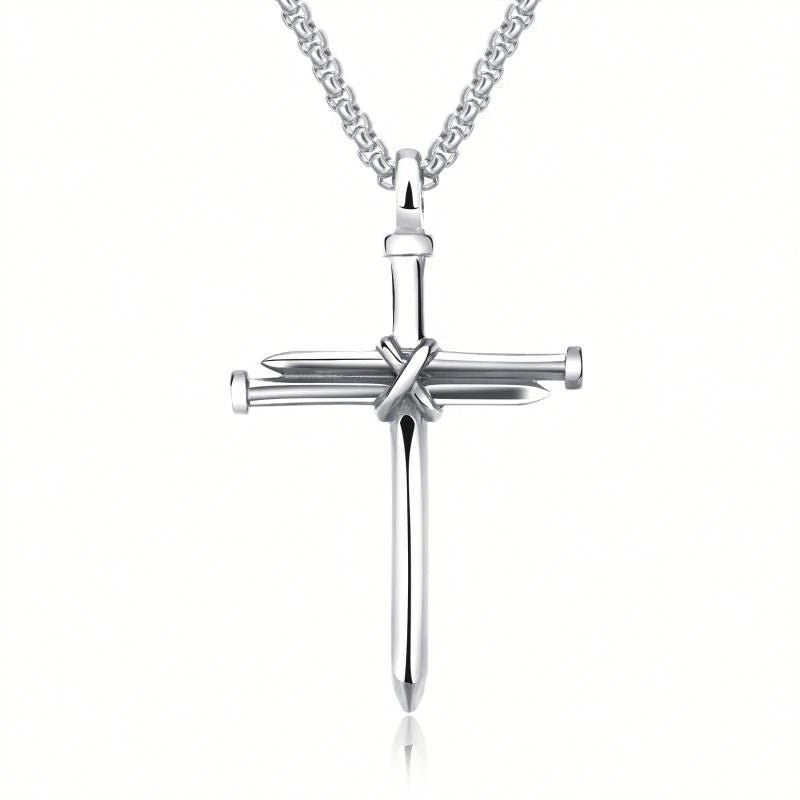
A nail motif points specifically to the crucifixion's physical suffering.
-
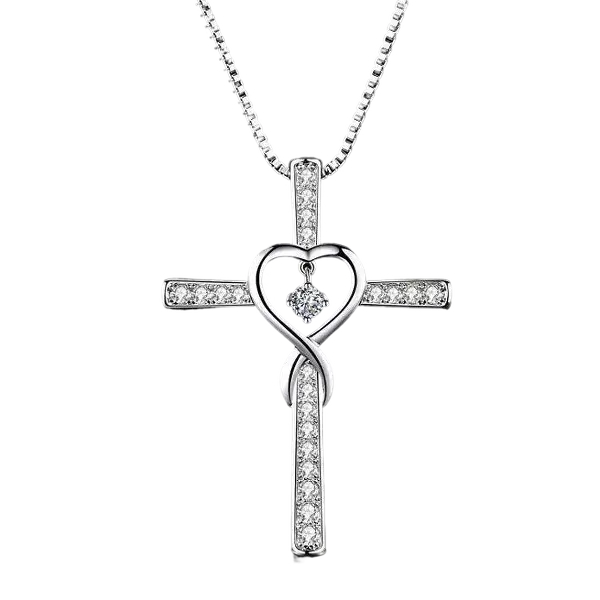
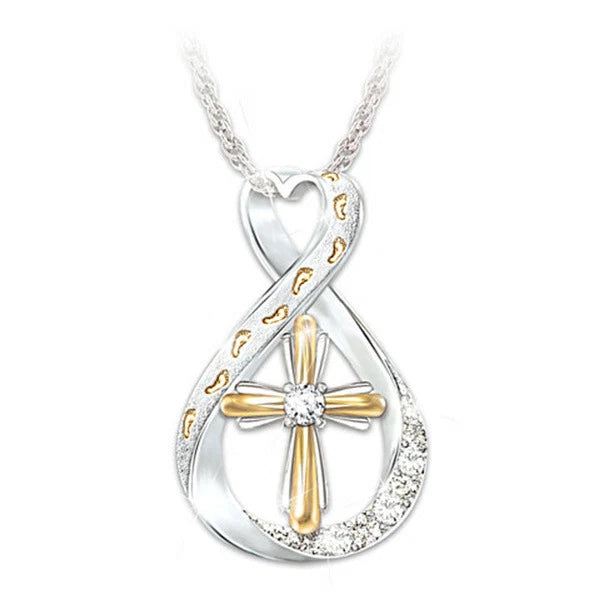
A cross with a heart blends the faith symbol with themes of love, often chosen as a gift.
-
Gold is frequently associated with permanence and value as a keepsake; silver with everyday simplicity; black finishes lean toward mourning or a more understated, modern read.
None of these variations change the core meaning they narrow or personalize it. If you're deciding between styles, our guide to types of cross necklaces and what each one means breaks down every major design in detail.
Why the Cross Has Moved From Church Pew to Everyday Fashion

If it feels like cross necklaces are everywhere right now on runways, on musicians, layered into everyday outfits that's not just a perception. Jewelry trend coverage has noted a real resurgence in demand for cross pendants well beyond traditional religious wearers over the past few years, and many trend writers argue the symbol was never truly out of fashion; it simply moves in and out of visibility depending on the era. This isn't new behavior for the cross specifically. Historically, it moved from a private, hidden symbol among early persecuted Christians to a public, universally recognized one only after Emperor Constantine's conversion made open Christian worship safe in the 4th century. Every few centuries since, the symbol has cycled between primarily devotional use and broader cultural adoption and the current fashion moment is best understood as one more cycle rather than a break from the symbol's history. What's different now is scale: global supply chains and social media let a single design trend reach millions of people who have no religious connection to the symbol at all, which is exactly why the "what does it actually mean" question gets searched so often people are encountering the symbol divorced from the context that used to explain it automatically.
Is There One "Correct" Meaning?
No and that's not a cop-out answer, it's the honest one. The cross has one historically fixed origin (the crucifixion) and one dominant religious interpretation (sacrifice, redemption, resurrection), but it does not have one single permitted meaning for every wearer. A necklace can honor a grandmother, mark sobriety, express faith, or simply complete an outfit, sometimes all in the same piece worn by the same person on different days. What matters more than picking the "official" meaning is being honest with yourself about which one is actually true for you, especially if you're wondering whether it's okay to wear one without attending church, a question we answer in full in Can You Wear a Cross Necklace If You're Not Religious?
Frequently Asked Questions
Does a cross necklace have to be religious to mean something?
No. While its historical and dominant meaning is Christian, a cross necklace can meaningfully represent remembrance, comfort, heritage, or personal style even for someone who isn't religious.
What is the most common meaning behind a cross necklace?
The most common and historically primary meaning is Christian: a reminder of Jesus Christ's crucifixion, sacrifice, and resurrection.
Does the design of the cross change its meaning?
Yes, in a secondary way. The base meaning stays constant, but details like an empty cross versus a crucifix, a nail motif, or an added heart each layer on a more specific message.
Is there one "correct" meaning of a cross necklace?
No single meaning is enforced for every wearer. The historical and religious meaning is fixed, but personal meaning comfort, memory, faith, style varies by individual and is equally valid.
Why do some people wear a cross necklace every day?
Daily wear is usually intentional; it turns the necklace into a constant, physical reminder of faith, a loved one, or a personal commitment, rather than an occasional accessory. We cover this specific question in more depth in What Does It Mean to Wear a Cross Necklace Every Day?
Do you have to be Christian to wear a cross necklace? No. Wearing one doesn't require any particular belief plenty of wearers choose a cross for its heritage, appearance, or personal significance rather than as a religious statement, though it's worth understanding the symbol's origin so you're wearing it thoughtfully.
Curious what your cross necklace means beyond faith? Explore why people choose to wear one in Why Do People Wear a Cross Necklace? The Real Reasons, or if you're ready to find a piece of your own, browse our cross necklace collection.

 FREE SHIPPING ALL OVER USA