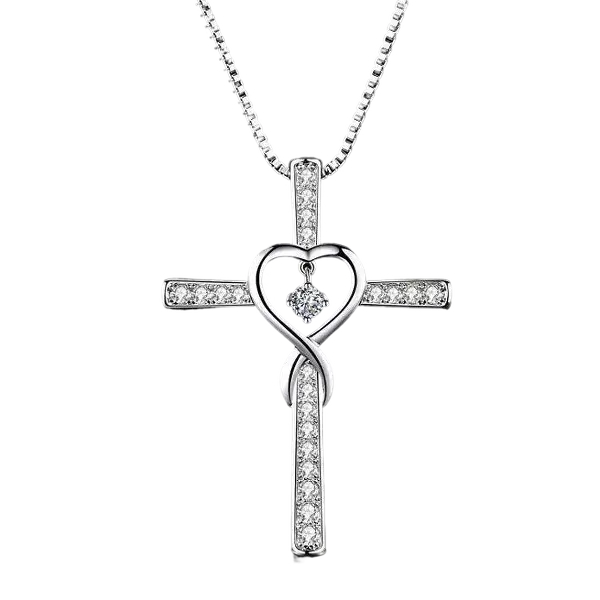
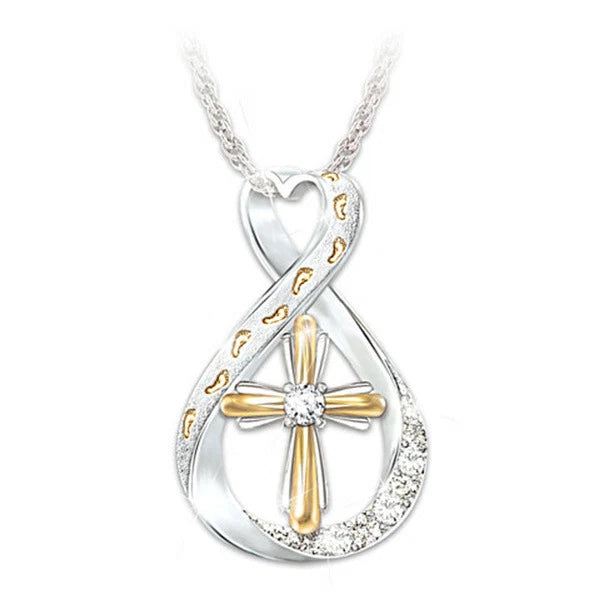
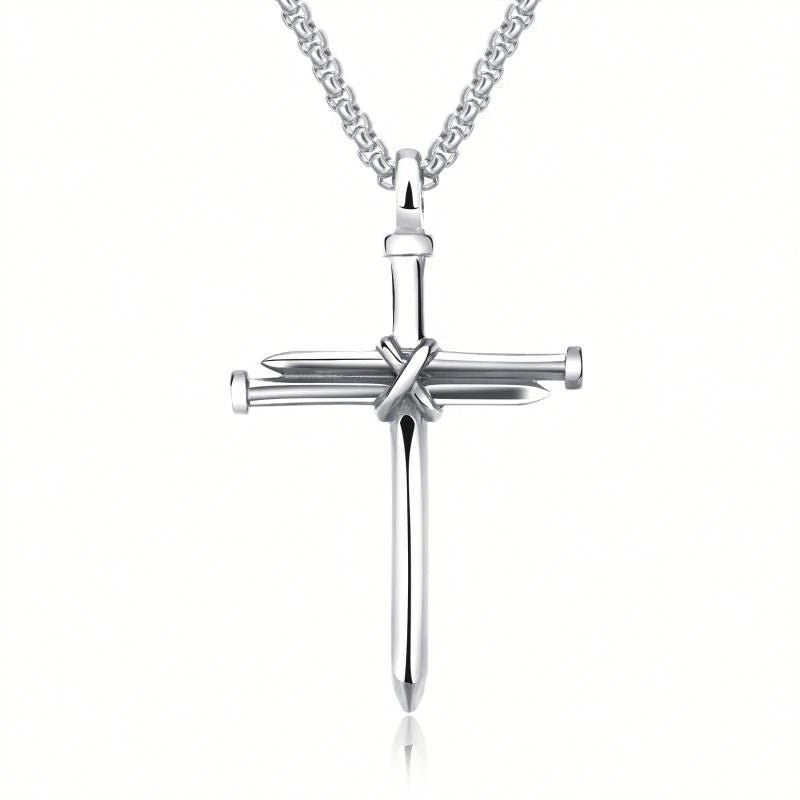
People wear a cross necklace for six main reasons: as a visible statement of Christian faith, as a psychological "comfort object" they reach for under stress, as remembrance of a person or a milestone like baptism, as a sentimental gift they don't want to take off, as part of a fashion or identity aesthetic, and as a piece of inherited family or cultural heritage. Most wearers aren't choosing just one; the same necklace usually carries two or three of these reasons at once, layered on top of each other over years of wear.
This is a different question from "what does a cross necklace mean." Meaning is about the symbol itself, what the cross has represented since the crucifixion. This article is about motivation which actually makes someone reach for the clasp every morning. If you want the full symbolic and theological answer first, read What Does a Cross Necklace Mean? Meaning, History & Why People Wear One That article is the foundation this one builds on.
It's a Visible Statement of Faith
The most common reason people wear a cross necklace is to make a quiet, daily statement of Christian faith a physical, always-on reminder of belief that doesn't require saying a word. Putting one on is a physical extension of Jesus's own instruction in Luke 9:23 to take up one's cross and follow Him. For these wearers, the necklace isn't decoration first; it's a form of testimony that happens to also be jewelry. Many describe touching it during a moment of prayer or doubt, treating it less like an accessory and more like a small, wearable anchor to something bigger than the day they're having.
For some traditions, this reason goes beyond personal preference. Members of the Eastern Orthodox and Oriental Orthodox Churches are traditionally expected to wear their baptismal cross at all times, a practice rooted in canon law from the Sixth Ecumenical Council. For these wearers, taking the necklace off isn't really an option to weigh it's closer to an ongoing obligation tied to their baptism than a daily choice. On the other end of the spectrum, a small number of Christian groups, including Jehovah's Witnesses, view wearing a cross as a form of idolatry and avoid the practice entirely. Both positions are worth knowing, because they're a reminder that "why do Christians wear a cross necklace" doesn't have one universal answer even within Christianity itself.
It Works as a Psychological Comfort Object and This Part Is Backed by Real Research
A cross necklace can function as a psychological comfort object, a physical item the brain associates with safety, which a wearer touches or holds to self-soothe during stress. This is the reason almost every competing article glosses over with a vague line about "comfort," without ever explaining why that comfort is real. Psychologist Donald Winnicott's concept of the "transitional object" first observed in how young children use a blanket or stuffed animal to self-soothe when separated from a caregiver has since been studied extensively in adolescents and adults. A study published in the Journal of the American Academy of Child Psychiatry examining 230 adolescents found that transitional-object attachment is far more common past early childhood than most people assume, and later research has extended the concept to how adults use meaningful physical objects the same way. Adults don't outgrow the need; they just trade the blanket for something more socially acceptable, like a ring, a watch, or a necklace worn every day. Mental health researchers describe this as "emotional anchoring": a specific object becomes linked to a feeling of safety, and touching it during a stressful moment a flight, a hospital hallway, or a hard conversation can genuinely help regulate the nervous system, in part through familiar, repetitive touch.
For a cross necklace specifically, this mechanism stacks with the symbol's own meaning: the object isn't just familiar, it's also tied to something the wearer already associates with safety, hope, or a person they trust. That combination of psychological grounding plus religious or personal significance is likely why so many wearers describe never taking it off, even on days their faith feels distant. Retail and consumer-behavior writers describe meaningful jewelry in almost identical terms, calling it an "emotional anchor" customers reach for during hard moments language that lines up closely with the clinical picture of adults relying on objects for grounding during grief, anxiety, or major transitions.
It's worth being precise about what this comfort function is and isn't, and where the psychological explanation and the faith explanation actually diverge. Many Christians, especially within Orthodox and Oriental Orthodox tradition, genuinely believe a worn cross carries a form of spiritual protection that's a matter of religious belief, not something this article is positioned to confirm or deny. What secular psychology can independently document is a separate, parallel mechanism: touching a familiar object measurably helps regulate stress through association and repetition, regardless of whether the object also has spiritual significance to the wearer. The two explanations aren't in competition for a believer, they simply describe the same lived experience from two different angles.
It Marks a Milestone or a Loss
Cross necklaces are one of the most common gifts tied to specific life events: baptism, First Communion, confirmation, graduation, and weddings all have their own traditions around giving one as a keepsake. On the other end of life, a cross is just as commonly kept or worn after a death inherited from a parent or bought specifically to mark someone's passing. In both cases, the necklace isn't primarily about theology; it's about the date, the person, or the moment it's tied to.
It's a Gift With Weight Behind It
Separate from milestone-specific gifting, a cross necklace carries a sentimental weight most other jewelry doesn't: giving one signals that the giver wants to share something of their own values with the recipient, not just hand over a nice object. That's part of why these pieces are disproportionately kept for decades rather than replaced.
It's Part of a Fashion or Identity Aesthetic

A growing share of wearers choose a cross necklace purely as a fashion or identity statement, independent of religious belief and pretending this reason doesn't exist, the way many faith-focused blogs do, misses a huge share of actual search intent. Cross necklaces got a visible boost in mainstream fashion in 2025 after reality TV moments like Love Island USA put them back in the cultural spotlight, and jewelry retailers from Tiffany to TikTok Shop sellers have leaned into the demand. Among Gen Z specifically, the cross shows up in at least two distinct style lanes: a "quiet luxury" look, where a small, delicate cross paired with simple layering pieces signals understated heritage, and a "dark academia" or grunge look, where an oversized cross is worn deliberately as an edgier, more rebellious statement. Neither wearer is necessarily making a religious claim for plenty of people in this group, the cross is chosen the same way any other pendant shape would be: because it looks good layered, photographs well, and has become one of the most recognizable silhouettes in jewelry.
This is also the reason that generates the most visible tension online. Search interest around phrases like "why wear a cross necklace if you're not religious" has grown alongside the trend, and it's not uncommon to see comment threads where practicing Christians push back on purely aesthetic use of the symbol, while non-religious wearers defend it as no different from wearing any other meaningful shape. Neither side is factually wrong it genuinely is a religious symbol with a fixed historical meaning, and it's also true that individuals get to decide what an object means to them personally. The honest takeaway for anyone choosing a cross for purely aesthetic reasons is less about whether it's "allowed" and more about wearing it with some awareness of what it represents to the people around you.
The identity dimension of this reason has also played out in real workplace disputes, not just online debate. British Airways flight attendant Nadia Eweida and NHS nurse Shirley Chaplin were both disciplined in the UK for wearing visible cross necklaces against employer uniform policy, and both cases eventually reached the European Court of Human Rights in 2013. The court ruled in Eweida's favor, finding her employer hadn't struck a fair balance with her right to manifest her faith, while it sided with the hospital in Chaplin's case on health-and-safety grounds specific to clinical settings. Whatever a wearer's personal reason, that split outcome is a reminder that the cross has never been purely decorative in the eyes of institutions, even when it is for the individual wearing it.
It's Inherited Family or Cultural Heritage
In many households, a cross necklace isn't chosen so much as passed down from a grandmother, a godparent, or a parent which ties the wearer to family history and cultural background independent of how observant they personally are today. This is often the quietest of the six reasons, since it rarely gets explained out loud, but it's one of the most common answers when people are asked directly why they still wear a specific piece.
The 6 Reasons at a Glance
| Reason |
What It Looks Like Day to Day |
Most Common Among |
| Faith statement |
Worn daily as a visible declaration of belief; often touched during prayer |
Practicing Christians of any age |
| Comfort object |
Reached for during stress, travel, or hard conversations |
Anyone managing anxiety or a difficult season |
| Milestone / loss marker |
Given at baptism, confirmation, graduation, or kept after a death |
Families marking a specific date or person |
| Sentimental gift |
Rarely removed once given; tied to the relationship, not just the object |
Recipients of gifts from parents, partners, or close friends |
| Fashion / identity |
Layered with other necklaces; chosen for silhouette and styling |
Gen Z and fashion-forward wearers |
| Family / cultural heritage |
Inherited rather than purchased; worn without much explanation |
Multigenerational families, cultural communities |
Does the Material Change the Reason Someone Wears It?
Not the core reason, but it does affect who reaches for which piece. Wearers who fall mainly into the "comfort object" or "fashion/identity" categories increasingly favor low-maintenance materials they can wear every single day without babying them which is a big part of why stainless steel has overtaken more delicate metals as the go-to choice for daily-wear cross necklaces. Unlike softer metals that tarnish or need regular polishing, stainless steel holds its finish through workouts, showers, and travel, which matters enormously to someone using the necklace as a constant, touchable anchor rather than an occasional accessory. Wearers in the "milestone gift" or "heritage" categories, by contrast, often prioritize a piece that feels special or ceremonial over one that's purely practical though even there, stainless steel has become a popular choice for its durability as a piece meant to be handed down. If you're weighing metal, chain length, or sizing for your own piece, our buying guide to metal, sizing, and how to verify what you're getting walks through the decision in full.
Is Wearing a Cross Necklace Old-Fashioned or Trendy?
Both, and that's not a contradiction it's exactly why the symbol has lasted this long. A cross necklace can be a decades-old heirloom and a 2026 TikTok trend on the same day, worn by different people for entirely different reasons. Trend cycles come and go, but the underlying reasons on this list: faith, comfort, memory, gifting, identity, heritage don't really go out of style, which is part of why the cross keeps resurfacing in fashion instead of fading the way most jewelry trends do.
Why Most People's Reason Isn't Just One of These
In practice, these six reasons rarely show up in isolation. A woman might receive a cross necklace at her confirmation (milestone), keep wearing it into her thirties because touching it calms her before a hard meeting (comfort object), and only occasionally think about the theology behind it (faith) all from the same piece of jewelry. A college student might buy one purely because it's trending on TikTok (fashion/identity), then find a year later that it's become the one thing they never take off at which point it's quietly become a comfort object too, regardless of why they bought it. If you're trying to understand your own reason, it's often more useful to ask which of the six feels strongest right now than to look for one permanent answer.
Frequently Asked Questions
Do you have to be religious to wear a cross necklace?
No. While faith is the most historically rooted reason, plenty of wearers choose one for comfort, remembrance, family heritage, or style, without treating it as a religious statement.
Why do some people never take their cross necklace off?
Often because it functions as a comfort object as much as a symbol, the constant physical presence is part of what makes it soothing, similar to how a wedding ring or a sentimental watch is rarely removed.
Is wearing a cross necklace considered old-fashioned or trendy?
Neither exclusively. The cross has cycled between devotional use and mainstream fashion moments for centuries, and it's currently experiencing one of its more visible fashion resurgences alongside its ongoing religious use.
Can wearing a cross necklace be a form of comfort rather than religion?
Yes. Psychology recognizes meaningful physical objects as tools for emotional grounding, and a cross necklace can serve that function for a wearer regardless of their personal religious belief.
Do all Christians wear a cross necklace?
No. Practice varies by tradition Eastern and Oriental Orthodox Christians are generally expected to wear their baptismal cross at all times, while some groups, including Jehovah's Witnesses, avoid wearing one on theological grounds. Most Christian denominations treat it as optional personal expression rather than a requirement either way.
Want to understand what the symbol itself represents, beyond why people choose to wear it? Read What Does a Cross Necklace Mean? Meaning, History & Why People Wear One Choosing your own piece? Our buying guide to metal, sizing, and how to verify what you're getting covers exactly what to look for. Ready to browse? See our cross necklace collection.

 FREE SHIPPING ALL OVER USA