A cross means one thing. A heart means another. Put them on the same chain, and you’re no longer wearing two symbols you’re wearing an argument: that love without conviction drifts, and faith without love goes cold. A heart cross necklace makes that argument every time it catches the light.
This piece covers what a heart cross necklace actually means, what faith is according to the Bible, how faith and love are connected in scripture, the verses most often quoted on faith, hope, and love, the real difference between an everyday heart-and-cross pendant and the specifically Catholic Sacred Heart image, where the symbol actually comes from, and who this necklace makes sense to give to.
What a Heart Cross Necklace Means
A heart cross necklace fuses two of the oldest symbols in Christian jewelry into a single pendant: a cross, which stands for faith, sacrifice, and the crucifixion of Jesus Christ, and a heart, which stands for love God’s love, human love, or both at once. Read together, the message is specific. Not just faith, not just love, but a love that holds up because it’s anchored in something beyond feeling.
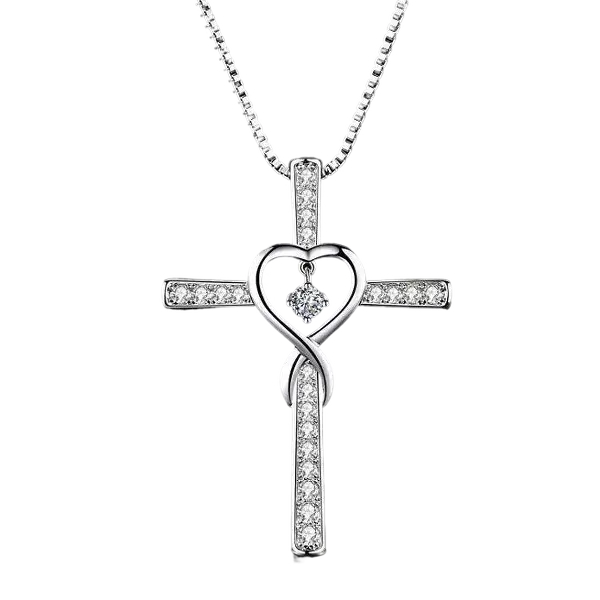
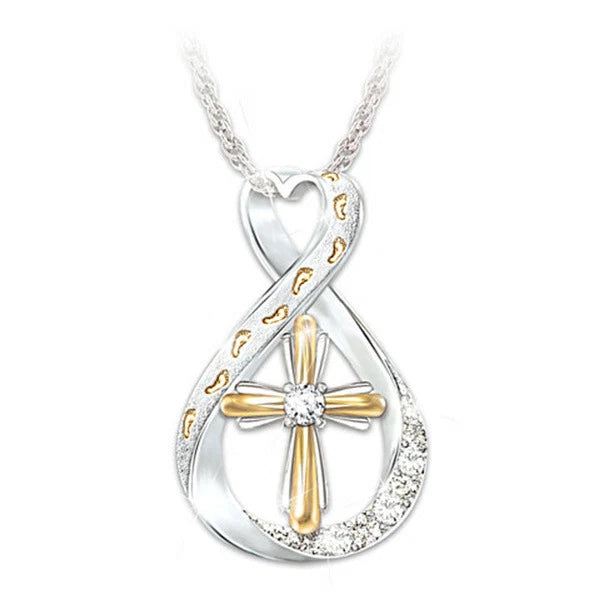
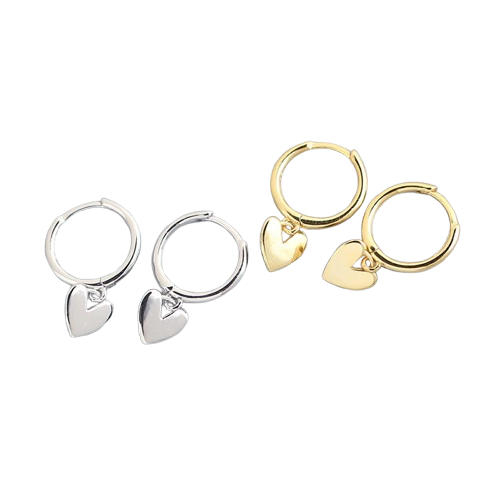
A cross necklace heart pendant takes a few physical forms, and each says the same thing slightly differently. Sometimes the heart, the infinity symbol, and the cross come together in one fused pendant, so faith, love, and permanence read as a single shape rather than three separate ideas. Sometimes a dangling heart charm hangs beneath a plain cross, two pieces sharing one chain but staying visually distinct. Sometimes a cross carries a two-tone heart accent worked into the design near the top. The construction changes; the message underneath it doesn’t.
What Is Faith? A Biblical Definition
Faith, in the biblical sense, is confident trust in what God has promised, even before it’s visible. The clearest definition in scripture comes from Hebrews 11:1 (ESV): “Now faith is the assurance of things hoped for, the conviction of things not seen.”
That’s a specific claim, not a vague one. Faith isn’t a synonym for optimism or wishful thinking. It’s described as assurance a settled confidence and conviction, which implies evidence strong enough to act on, even before the outcome is visible. The rest of the chapter lists people who acted on exactly that kind of trust: Abraham leaving home without knowing where he was going, Noah building a boat before it had ever rained, Sarah conceiving a child well past the age when that was supposed to be possible.
So when someone asks what faith is in the Bible, the honest answer is: it isn’t certainty because you’ve already seen proof. It’s confidence because you trust the one who made the promise.
Faith and Love: How the Bible Connects Them
Faith and love aren’t presented in scripture as two separate virtues that happen to get paired on a necklace. They’re described as functioning together. Galatians 5:6 (ESV) puts it plainly: what counts is “faith working through love.”
That phrase does real work. It means faith that never shows up as love isn’t finished it’s faith that hasn’t found its expression yet. Paul makes the same point more sharply in 1 Corinthians, writing that even a faith strong enough to move mountains amounts to nothing without love behind it. Love, in that framing, isn’t a separate department from faith. It’s what faith looks like once it’s acted on.
The connection runs the other direction too. First John traces the origin of human love outside of us entirely we love only because God loved first. Faith and love, in other words, aren’t two virtues sitting side by side. One produces the other.
Biblical Verses on Faith, Hope, and Love
These are the verses most often quoted on the subject, gathered in one place:
| Verse |
What It Says |
Why It’s Here |
| 1 Corinthians 13:13 (ESV) |
“So now faith, hope, and love abide, these three; but the greatest of these is love.” |
Names all three, and ranks love above the other two. |
| Hebrews 11:1 (ESV) |
“Now faith is the assurance of things hoped for, the conviction of things not seen.” |
The Bible’s own definition of faith. |
| Galatians 5:6 (ESV) |
“…only faith working through love.” |
Faith and love described as one motion, not two separate virtues. |
| 1 John 4:19 (ESV) |
“We love because he first loved us.” |
Traces human love back to its source. |
| Romans 5:5 (ESV) |
“…hope does not put us to shame, because God’s love has been poured into our hearts…” |
Ties hope and love together directly. |
Read together, the pattern is consistent: faith is trust in what hasn’t been seen yet, hope is what that trust is aimed at, and love is what outlasts both and what faith is supposed to produce along the way.
The Heart and Cross Together: Sacred Heart vs. Everyday Symbolism
Most heart cross necklaces sold as jewelry aren’t depicting a specific Catholic devotion they’re a simpler visual shorthand: heart for love, cross for faith, worn together as one statement about both. That’s worth saying plainly, because there’s a second, more specific tradition that shares the same two shapes and means something narrower.
The Sacred Heart of Jesus is a distinct Catholic devotion, not just a design choice. It traces back to a series of reported visions a French Visitation nun, Margaret Mary Alacoque, described beginning on December 27, 1673 and continuing over the following eighteen months. She said Christ revealed his heart to her pierced, wrapped in a crown of thorns, topped with a small cross, and wreathed in flame as a sign of his love for humanity, and asked that a feast be established in its honor. The devotion stayed controversial within the Church for decades; the Vatican didn’t grant the feast to France until 1765, and it wasn’t extended to the universal Church until 1856, under Pope Pius IX. Margaret Mary herself was canonized in 1920.
|
Everyday Heart Cross Necklace |
Sacred Heart of Jesus |
| Origin |
A modern jewelry design pairing two established symbols |
A specific set of 17th-century visions reported by St. Margaret Mary Alacoque |
| Imagery |
A smooth heart shape paired with a plain cross |
A heart shown pierced, crowned with thorns, topped with a small cross, wrapped in flame |
| What It Claims |
Love held up by faith, in general Christian terms |
Christ's literal, personal love for humanity, tied to a specific devotional practice |
| Who It Belongs To |
Worn across denominations, and by people with no specific denomination |
A Catholic devotional practice, with its own feast day on the Church calendar |
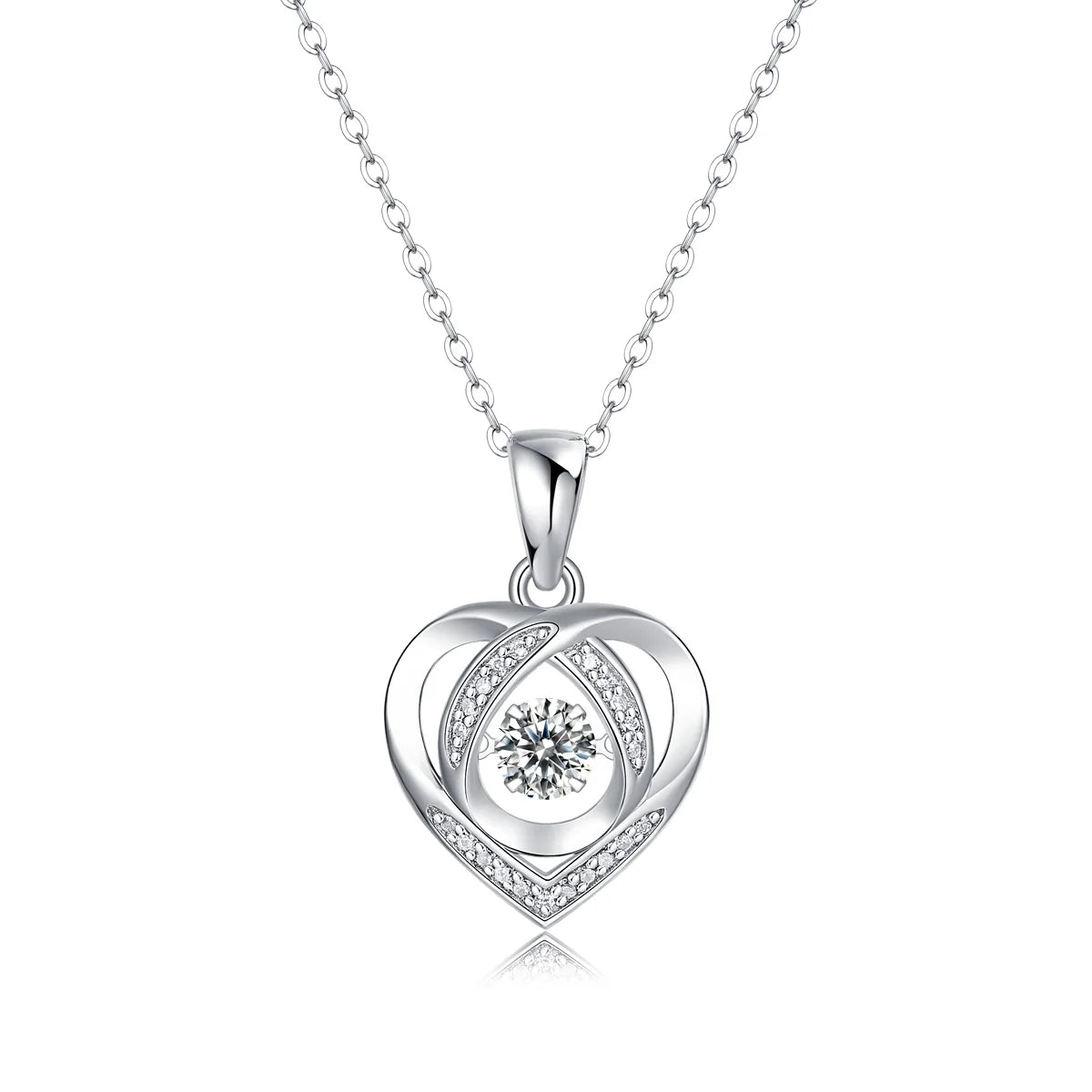
An everyday heart cross necklace, with a smooth heart shape and a simple cross, isn’t making that second, more specific claim. It’s the broader, denomination-agnostic version: love and faith, worn together, without the additional layer of Sacred Heart devotion. Worth knowing before giving one to someone for whom that distinction actually matters.
Where the Heart-and-Cross Symbol Comes From
The cross itself wasn’t always safe to display. In the first two centuries after the crucifixion, Christians in the Roman world tended to identify themselves with coded symbols instead the ichthys (fish) and the chi-rho monogram, rather than the cross itself, which was still, after all, an instrument of Roman execution. That changed after Emperor Constantine’s Edict of Milan legalized Christianity in 313 CE, and accelerated further after his mother, Helena, reportedly discovered relics of the True Cross in Jerusalem around 326 CE. The earliest surviving cross pendants date from the 4th and 5th centuries that followed small gold pieces worn across the Roman and Byzantine world. As Christianity spread across cultures over the following centuries, the cross picked up local variations in shape and style, but the core meaning the crucifixion and what it purchased stayed constant.
The heart’s path into Christian symbolism took longer and ran through art and devotional writing rather than an official decision. Medieval mystics wrote about the heart as the seat of love and will centuries before Margaret Mary Alacoque’s visions gave it a formal devotional home in the 1670s. By the time jewelers started pairing a heart with a cross on a single pendant a relatively modern development, mostly a 20th-century one both symbols already carried centuries of independent meaning. The combination didn’t invent anything new. It just put two established ideas on the same chain.
What the Metal Adds to the Meaning
The symbolism doesn’t stop at the shape. The material carries its own layer of meaning:
Gold has long stood for what’s most valuable. A gold heart cross necklace reads as treating faith and love as the wearer’s most valued possession, not just an accessory.
Silver carries a specific biblical association with purity Psalm 12:6 describes God’s words as silver refined in a furnace, purified seven times over. A silver heart cross necklace leans into that idea of something made clean, not just a budget choice.
Rose gold reads as the most overtly romantic option, its pink undertone associated with tenderness and affection fitting for a necklace already built around the idea of love held up by faith. An infinity heart cross pendant like this one comes in gold, silver, or rose gold, letting the same design carry three different moods depending on the tone chosen.
Stainless steel trades symbolic weight for practicality: it won’t tarnish, reacts to almost no skin, and survives showers, gyms, and daily wear without extra care the right call when the necklace is meant to be worn constantly rather than saved for occasions.
A Disagreement Worth Knowing About
Not every Christian tradition is comfortable with religious jewelry, and it’s worth knowing that going in rather than finding out after the gift is opened. Some Protestant traditions, particularly those shaped by a stricter reading of the commandment against graven images, are cautious about wearing religious symbols as adornment, seeing a risk that the symbol becomes decoration rather than devotion. This isn’t a fringe view it’s a longstanding position within parts of the Reformed and Puritan-influenced tradition, and it’s a reason some sincerely faithful people don’t wear a cross at all, heart-shaped or otherwise.
For most Christians across Catholic, Orthodox, and the majority of Protestant traditions, a cross necklace is simply a visible reminder of belief, not an object of worship in itself, and that concern doesn’t apply. But if the necklace is meant for someone whose specific church or upbringing isn’t fully known, it’s a five-minute question worth asking rather than an assumption worth making.
Who a Heart Cross Necklace Suits
A first communion or confirmation. Marks a young person stepping into their own faith, with love from the person giving it the same idea covered from the receiving end in wearing a cross necklace.
A christening or baptism. A classic way to mark a child’s entry into the faith, often small enough to be worn from infancy.
A wedding, engagement, or anniversary, for a couple who wants their relationship named as something bigger than romance alone a theme explored further in gifts that see her faith.
A season of grief or loss, when the giver wants to say both “I love you” and “you’re not carrying this without hope” at once, echoing where that strength comes from in the first place.
A friend going through something hard, where a plain gift feels thin but a long card feels like too much.
Frequently Asked Questions
Is it okay to wear a necklace with a cross?
Yes. For most people it’s read as a sign of Christian faith, though plenty of people wear one for its look alone, without intending a religious statement. If it’s a gift, it’s worth knowing which one applies to the person receiving it.
What does a heart cross necklace mean?
It combines the meaning of a cross (faith, sacrifice, the crucifixion) with the meaning of a heart (love), together saying something like: love held up by faith, or faith expressed as love.
What is a necklace with a cross called?
Simply a cross necklace. When a heart is added to the design, it’s usually called a heart cross necklace or a cross-and-heart necklace.
What is the spiritual meaning of a heart necklace on its own?
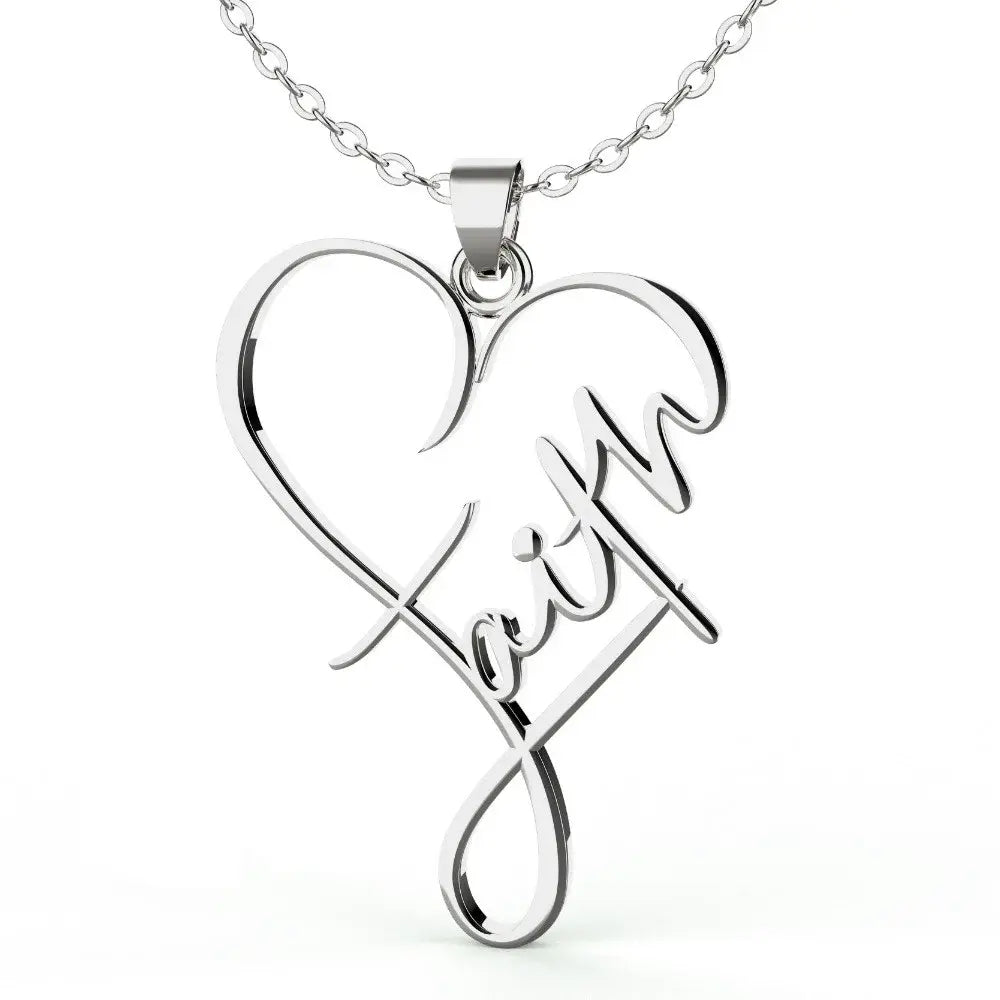
Without a cross attached, a heart necklace is read more generally love, devotion, or affection between two people without a specifically Christian claim built in. A piece like a ‘Faith’ script pendant sits in between the two: it keeps the faith statement in the word itself rather than in the cross shape. Adding a literal cross is what makes that statement explicit through the symbol instead.
Is a heart cross necklace only for Catholics?
No. The simple heart-and-cross design is worn across denominations, and by people with no specific denomination at all. Only the formal Sacred Heart of Jesus imagery pierced heart, thorns, flame carries a distinctly Catholic devotional meaning.
What is the difference between faith and love in the Bible?
They’re described as distinct but inseparable. Faith is trust in what God has promised; love is what that trust produces once it’s acted on. Scripture names love, not faith, as the one that lasts forever.
Why are faith, hope, and love grouped together in the Bible?
Because 1 Corinthians 13:13 names all three as what remains after everything else fades and ranks love above the other two, since unlike faith and hope, it doesn’t end once its purpose is fulfilled.
Does the metal of a heart cross necklace matter?
Not doctrinally, but it changes what the piece communicates. Gold leans formal and treats the symbol as precious; silver carries a biblical association with purity; rose gold leans romantic; stainless steel prioritizes durability over symbolism. None is more correct they emphasize different things.
When did people start wearing heart cross necklaces specifically?
The cross became safe to wear openly after the early 4th century, but pairing it with a heart on one pendant is a much more recent, mostly 20th-century jewelry development newer than either symbol on its own, though it draws on centuries of meaning from both.
The Symbol, Worn
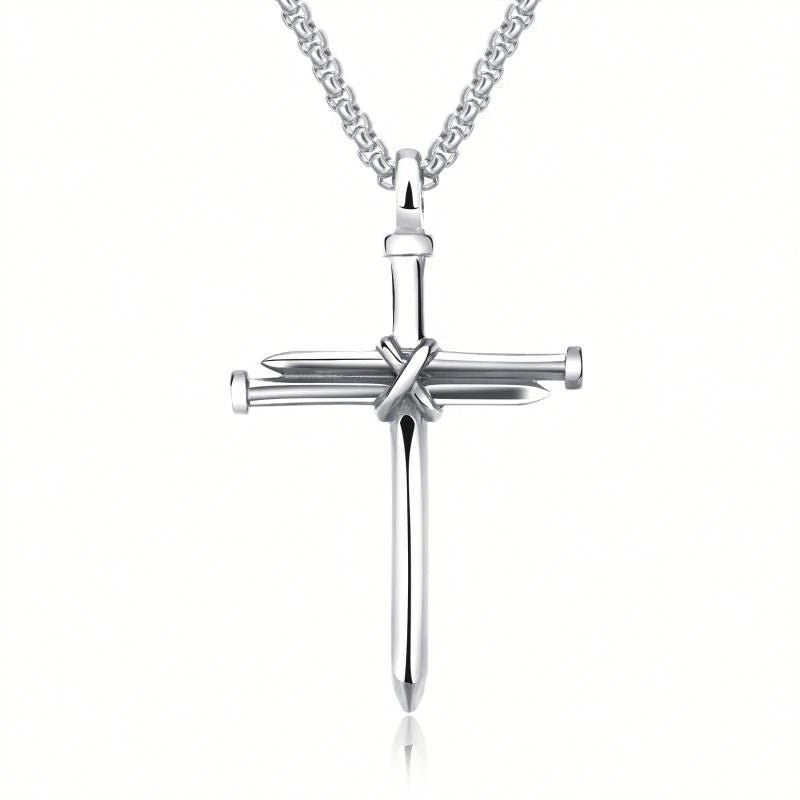
A heart cross necklace doesn’t need to be explained to do its job. But knowing what it’s actually saying that real love holds up because it’s anchored in something beyond feeling, and that real faith shows itself by how it loves makes it a gift with a spine, not just a shape. The full cross necklace collection carries the range, from the plainest crucifix to the heart-and-infinity styles covered here.

 FREE SHIPPING ALL OVER USA