Wearing a cross necklace means carrying a visible, personal reminder of Christian faith close to your body, not just owning one, but choosing to put it on. For many people, it becomes a quiet way of carrying belief through an ordinary day: the school run, a hard meeting, a hospital waiting room, or nothing more eventful than a Tuesday. That daily, repeated choice is where most of the meaning actually lives, and it's the part most articles on this topic skip past on their way to a one-line definition.
This guide goes further: where the practice of wearing a cross actually came from, what it does and doesn't do, who it's for, when it's appropriate, and why something as ordinary as the metal it's made from, a stainless steel cross necklace versus a delicate gold one, changes whether you can realistically wear it every day at all.
More Than Owning It: What Changes When You Actually Wear One
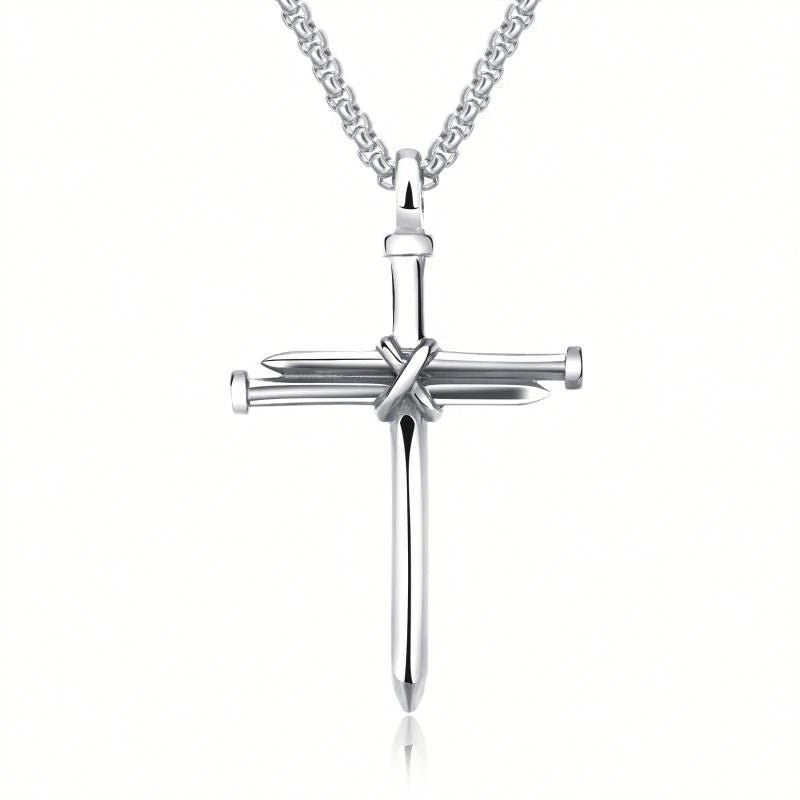
A stainless steel cross necklace sitting in a jewelry box is a symbol. The same piece resting against your skin, moving with you through the day, becomes something closer to a practice. Christian teaching doesn't require wearing one, there's no verse instructing believers to wear jewelry as proof of anything. But the habit of putting it on each morning is where an abstract belief turns into something you can physically feel: a small, repeated decision that quietly says, this still matters to me today.
Where the Practice Came From
The cross hasn't always been worn openly. For roughly the first three centuries after Jesus's death, Christians avoided displaying it entirely, it was still recognized as a Roman method of execution, and using it as an identifying image would have been closer to inviting the same fate than declaring faith. Early believers used quieter symbols instead, a fish, an anchor, a shepherd carrying a lamb.
That changed in the fourth century, after Emperor Constantine's conversion and the Edict of Milan in 313 AD, which ended the threat of persecution and let Christian symbols move into public life for the first time. From there, the cross gradually moved from churches and manuscripts into something ordinary believers eventually wore on their bodies, and by the time it reached everyday jewelry centuries later, it was already carrying an enormous amount of history behind it. If you want the fuller story, including how the shape existed long before Christianity gave it this meaning, we've covered that in more depth in our full history of the cross.
What the Bible Actually Says About Carrying the Cross
Scripture never mentions cross jewelry specifically, that's a modern practice, not a biblical instruction. But it says a great deal about "the cross" as an idea, and it's worth knowing the difference between the two.
Paul writes in Galatians 6:14 that he will boast in nothing except the cross of Christ, and in 1 Corinthians 1:18 describes the message of the cross as foolishness to some but the power of God to believers. Jesus himself, in Matthew 16:24, tells his followers that anyone who wants to follow him must take up his cross, language about surrender and daily discipleship, not about accessories.
In short, the biblical "cross" is mostly about a posture of the heart: trust, sacrifice, following through. A necklace doesn't accomplish that on its own. What it can do is act as a small, tangible cue, something that catches your eye in a mirror or against your skin and nudges you back toward what you actually believe.
Does Wearing One Actually "Do" Anything?
This is worth answering honestly rather than glossing over. A cross necklace isn't a charm. Mainstream Christian teaching doesn't treat it as something that wards off harm or guarantees protection on its own, comfort and protection are understood to come from faith itself, not from the object worn around the neck.
That doesn't make the necklace meaningless, it just locates the meaning in the right place. The value isn't in the piece; it's in what the piece points you back toward. Many people find that a cross steadies them in a hard moment, and that's real, but theologically it's understood to work the way a wedding ring or a photograph works: not as magic, but as a physical anchor for something already carried inside. We go deeper into this exact question, including where the "protection" belief actually comes from historically, in does a cross necklace protect you from evil.
Cross or Crucifix: Does the Style You Wear Change the Meaning?
Slightly. A plain, empty cross tends to be more common in Protestant tradition and leans toward the resurrection, Christ is risen, the cross is empty. A crucifix, which includes a figure of Christ, is more common in Catholic and Orthodox tradition and leans toward the sacrifice itself, the cost that was paid. Some traditions also treat wearing a cross as something continuous rather than occasional, closer to a lifelong marker than a piece taken on and off for church. Neither approach is "more correct," they're different traditions emphasizing different sides of the same event. The full comparison between a cross and a crucifix breaks this down if you're deciding which one fits you.
Do You Have to Be Christian, or a "Good" One, to Wear a Cross Necklace?
No, on both counts, and this deserves a straight answer rather than a vague one.
Plenty of people who aren't religious wear a cross necklace for reasons that have nothing to do with church attendance: a grandmother's necklace passed down, a design they find beautiful, or a personal connection to what the shape represents, hope, resilience, remembrance, without a specific religious claim attached. That's a legitimate way to wear it. Where it gets more sensitive is intent: wearing one specifically to mock, or purely as an ironic costume piece, is what tends to read as disrespectful, not the simple act of someone wearing it out of genuine appreciation. Worth knowing, too, that not every Christian group wears one either, a small number of denominations avoid religious jewelry altogether out of concern about idolatry, so the practice has never been universal even within the faith.
And if you're Christian but have ever hesitated to wear one because you didn't feel "worthy" of it yet, that hesitation is worth setting down too. A cross necklace isn't a badge reserved for people who have their faith fully figured out. If anything, it's closer to the opposite, a reminder of grace rather than a reward for good behavior. Wearing one while you're still working things out isn't a contradiction. It's most of what faith actually looks like, worn close to the skin instead of kept private.
When and Where Is It Appropriate to Wear One?
This is practical, everyday information that's genuinely useful and rarely covered anywhere.
Everyday and work settings: A modest stainless steel cross necklace is generally treated like any other personal jewelry in most workplaces and schools. It isn't always a given, though. In the UK, British Airways employee Nadia Eweida was sent home in 2006 for visibly wearing hers; her case eventually reached the European Court of Human Rights, which ruled in her favor in 2013. A separate case heard alongside hers, involving a nurse named Shirley Chaplin, went the other way, the court accepted the hospital's health and safety reasoning for asking her to remove it. The takeaway isn't that workplaces can't restrict visible jewelry, it's that policies vary and are worth checking rather than assuming either way.
Interviews and formal settings: A small, simple pendant reads as neutral. Larger or more elaborate crucifix designs lean more overtly religious, which is a matter of personal comfort rather than a rule.
Funerals and mourning: Cross necklaces, especially in black or darker stainless steel finishes, are commonly worn specifically as mourning pieces, making them one of the more fitting pieces of jewelry for this context.
Baptisms, confirmations, and milestones: This is when a cross necklace is most traditionally given and first worn, often marking the occasion itself as much as ongoing faith.
Traveling abroad: In some countries, visibly wearing a cross can be read differently than it would be at home. A little cultural awareness before traveling goes a long way.
Why the Material You Wear It In Matters
If the meaning of a cross necklace comes largely from wearing it constantly, through showers, workouts, sleep, and ordinary weather, then the material isn't a small detail. It's the difference between a piece that's realistically worn every day and one that ends up back in the drawer within a month.
This is a big part of why a stainless steel cross necklace has become such a common everyday choice: it resists tarnish and rust far better than plated metals, it's hypoallergenic for people with sensitive skin, and it holds up to daily knocks and scratches better than soft gold. None of that changes what the symbol means, but it does change whether "wearing it every day" is something you can actually keep up with rather than something you meant to do.
Caring for a Stainless Steel Cross Necklace
- A little basic care keeps it looking new for years:
- Wipe it down with a soft, dry cloth after wearing it in humidity or sweat.
- Clean occasionally with mild soap and warm water; avoid harsh chemicals or chlorine.
- Store it flat or hanging so it doesn't tangle or pick up minor scratches.
- Skip polishes made for gold or silver, stainless steel doesn't need them.
Why People Actually Choose to Wear One
The reasons vary more than most people expect, and they're rarely just one thing. Some wear a stainless steel cross necklace as a quiet, everyday marker of identity, chosen specifically because it can survive being worn without a second thought. Others reach for one specifically during hard seasons, something to hold onto when words don't come easily. Many receive one as a gift tied to a specific milestone, a baptism, a graduation, a season of healing, and the necklace ends up carrying that memory as much as the faith behind it. And for a good number of wearers, it's inherited: a parent's or grandparent's necklace, worn as much for family connection as for belief.
It's also completely normal for style and meaning to sit side by side, wanting a necklace that looks beautiful doesn't cancel out what it represents. The two aren't in competition. We've gone through the full range of reasons people wear one if you'd like the longer version.
Frequently Asked Questions
Do you have to be Christian to wear a cross necklace?
No. Many people wear one for its design, family history, or personal meaning without religious intent, though it's worth wearing thoughtfully given what it represents to others.
Does wearing a cross necklace protect you or bring good luck?
Not on its own. Within Christian belief, comfort and protection are understood to come from faith itself, not the object, the necklace works as a reminder, not a charm.
What's the difference between wearing a cross and a crucifix?
A plain cross is empty and emphasizes the resurrection; a crucifix includes a figure of Christ and emphasizes the sacrifice. Both point to the same event, just with a different emphasis.
Is a stainless steel cross necklace a good choice for everyday wear?
Yes. It resists tarnish, holds up to daily wear better than soft precious metals, and is generally safer for sensitive skin, all of which matters if the goal is wearing it constantly rather than occasionally.
Is it disrespectful for someone who isn't religious to wear a cross necklace?
Generally no, as long as it's worn out of genuine appreciation rather than mockery. Intent is what matters more than identity.
Can you wear a cross necklace to an interview or a funeral?
Yes to both. A small, simple pendant, often a thin stainless steel cross necklace, is treated as neutral, everyday jewelry in most professional settings, and cross necklaces are commonly worn specifically as mourning pieces at funerals.
However you came to wearing one, out of faith, memory, habit, or all three at once, a cross necklace is meant to be lived in rather than saved for occasions. If you're looking for a piece built for that kind of everyday wear, our stainless steel cross necklace styles are made with exactly that in mind.

 FREE SHIPPING ALL OVER USA