|
Cross |
Crucifix |
| Design |
Bare shape, no figure |
Cross plus the corpus (Christ's body) |
| Visual focus |
The shape itself |
The moment of crucifixion |
| Most associated with |
Protestant traditions generally; worn across all traditions |
Catholic devotion; also common in Orthodox, Lutheran, and Anglican practice |
| Common theological emphasis |
Often read as pointing toward the Resurrection |
Often read as centering Christ's sacrifice and suffering |
| Typical everyday jewelry use |
Extremely common, worn by people of many or no religious backgrounds |
Common, especially among Catholics and in Latin American and Mediterranean jewelry traditions |
Which Traditions Wear Each and Why
This is where a lot of explainers oversimplify, so it's worth being precise: there is no rule that says "Catholics wear crucifixes, Protestants wear crosses." That's a rough pattern, not a hard line, and the real picture is more interesting.
Catholic tradition gives the crucifix real liturgical weight. Church teaching holds that the Mass makes Christ's sacrifice present again in a sacramental way, so a crucifix not a plain cross is required for the processional and altar crosses used in Catholic worship. That's a big part of why the crucifix feels so central to Catholic devotional life, in churches and in homes alike.
Orthodox Christian tradition genuinely uses both, in roughly equal everyday measure, and it varies by jurisdiction. The distinctive Orthodox cross has three bars the top representing the inscription above Christ's head, the middle where his hands were nailed, and the slanted bottom bar a footrest. You'll find that three-bar shape sold plain, engraved with inscriptions like "IC XC NIKA" ("Jesus Christ Conquers"), and as a full crucifix with the corpus attached all three are common in Russian, Greek, and other Orthodox jewelry, so there's no single rule for what an Orthodox believer wears day to day.
Lutheran and Anglican traditions, somewhat surprisingly to people outside those churches, have historically used crucifixes too a legacy of how much liturgical tradition those churches kept from before the Reformation. So a crucifix on a Lutheran or Episcopalian altar isn't unusual at all.
Reformed, Baptist, and evangelical Protestant traditions are where the plain cross is most consistently the default, both in church buildings and in personal jewelry. This is the pattern most people are picking up on when they assume "cross equals Protestant."
The honest takeaway: a crucifix is most strongly associated with Catholic devotion and reads that way to most people at a glance, but it isn't exclusively Catholic, and a plain cross isn't exclusively Protestant either. Denomination is a strong signal, not a guarantee.
Why the Empty Cross? The Resurrection Argument, Briefly

Many Protestants who favor the plain cross point to the Resurrection: Christ's death wasn't the end of the story, and a cross with no figure on it points forward to that rather than freezing the moment of his death. Some traditions also grew wary of religious imagery altogether, connecting it to the biblical caution against graven images. This reasoning is part of the larger picture of why people wear a cross necklace in the first place faith is only one of several real reasons people give.
Why the Crucifix? The Crucifixion Argument
Catholic teaching doesn't see the crucifix as ignoring the Resurrection Easter is central to Catholic worship, and the Church observes a fifty-day Easter season, far longer than a single day. The reasoning behind the crucifix is different: it keeps Christ's sacrifice visually present as a reminder of what the sacrifice cost, echoing the apostle Paul's language about preaching Christ crucified in 1 Corinthians 1:23. For Catholics, that visual isn't a denial of the Resurrection it's a way of holding both truths, the cost and the victory, in view at once.
Does Wearing One Mean Something Different Than the Other?
In practice, yes, though gently. A crucifix necklace tends to be read as a more explicitly Catholic (or, less commonly, Orthodox, Lutheran, or Anglican) devotional piece, and it can carry a slightly more solemn, sacrifice-focused tone because of the imagery. A plain cross reads as broadly Christian without pointing to any one denomination, and it's the far more common choice in general, non-liturgical jewelry the kind sold in mainstream jewelry stores, worn as fashion, or given as a simple faith-based gift.
Neither piece is "more serious" or "more correct" than the other. They emphasize different halves of the same story: one holds the moment of the sacrifice in view, the other looks past it to the empty tomb.
Spotting the Difference When You're Shopping
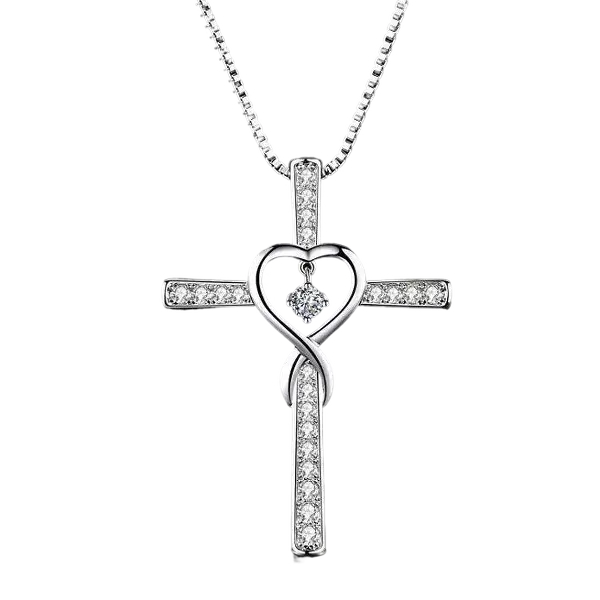
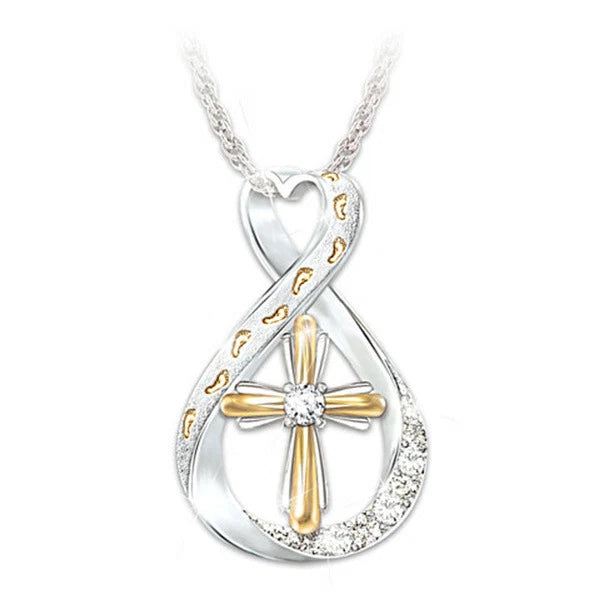
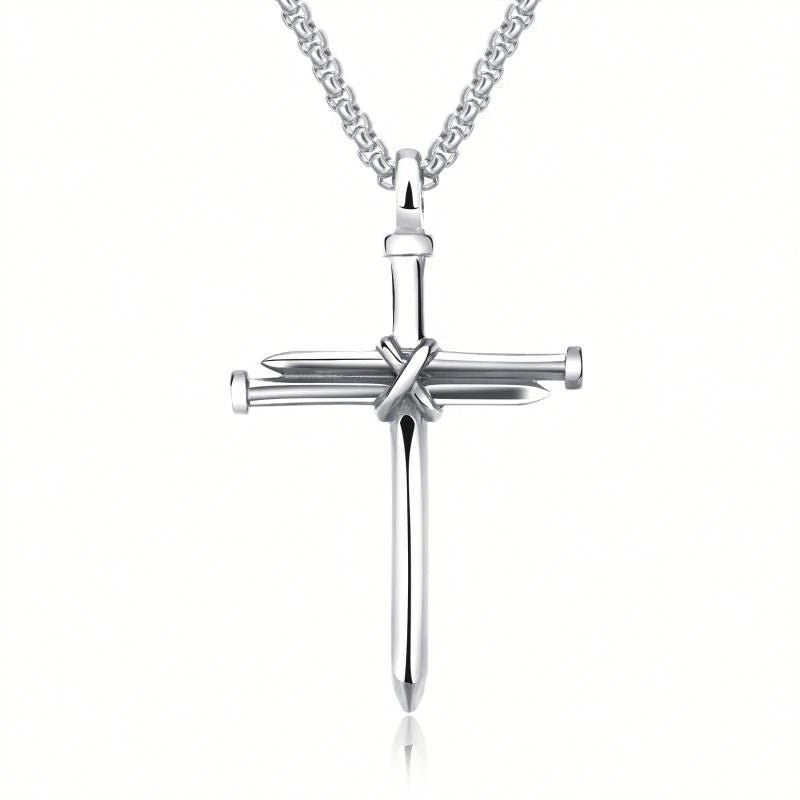
If you're looking at cross necklaces online or in a store, the identification is simple: look for a figure. If the pendant is just two intersecting bars with no raised or engraved body on it, it's a plain cross, whatever style of cross it is Latin, Celtic, Orthodox, or otherwise. If there's a small figure of Christ attached to it, even a stylized or minimal one, it's a crucifix by definition, regardless of how simple or ornate the rest of the design is.
This matters most as a gift. Giving a crucifix to someone from a tradition that doesn't use them or the reverse isn't offensive, but it can read as a small sign that you don't know their background well. When in doubt, a plain cross is the safer, more universally appropriate choice, since it's worn and recognized across nearly every Christian tradition and by plenty of people who wear it for reasons that go beyond religion entirely.
Can Anyone Wear a Crucifix, Regardless of Denomination?
Yes. There's no rule, biblical or otherwise, that restricts a crucifix to Catholics or a plain cross to Protestants. Plenty of non-Catholic Christians wear crucifixes because the imagery moves them personally, and plenty of Catholics wear plain crosses as everyday jewelry without it meaning anything doctrinal. Choosing one over the other is a matter of personal devotion, family or cultural tradition, and simple visual preference not a test of belonging.
Frequently Asked Questions
Is a crucifix more Catholic and a cross more Protestant?
As a general pattern, yes the crucifix holds special liturgical importance in Catholic worship, and the plain cross is the more typical choice in Reformed, Baptist, and evangelical Protestant tradition. But it's a pattern, not a rule: Lutherans and Anglicans commonly use crucifixes too, and Orthodox Christians wear both about equally.
Does wearing a crucifix mean something different from a plain cross?
The core faith it represents is the same, but the emphasis differs slightly. A crucifix tends to center Christ's sacrifice and suffering, while a plain cross is more often read as pointing toward the Resurrection and his victory over death.
What does INRI mean on a crucifix?
INRI stands for the Latin phrase Iesus Nazarenus, Rex Iudaeorum "Jesus of Nazareth, King of the Jews." According to the Gospels, this was the inscription Pontius Pilate ordered placed above Christ on the cross, and it appears on the small plaque, or titulus, near the top of many crucifixes.
Can anyone wear a crucifix, regardless of denomination?
Yes. There's no religious rule limiting the crucifix to Catholics specifically. Many Lutherans, Anglicans, and Christians from other traditions wear crucifixes as a matter of personal devotion.
Which one is more common in everyday jewelry, a cross or a crucifix?
The plain cross. It's the more widely worn design across denominations, cultures, and even among people wearing it simply as a meaningful accessory rather than a denominational statement, which is why it dominates mainstream jewelry collections.
Written by the Obsessed Believer editorial team. Last updated September 2026. If you're drawn to the simplicity of the plain cross, explore our cross necklace collection for pieces that keep the design close to its original meaning.

 FREE SHIPPING ALL OVER USA